The Slow Trains of the Scottish Highlands
On Britain's most remote railway, time moves differently — measured not in minutes, but in lochs passed, moors crossed, and the particular quality of silence between stations.
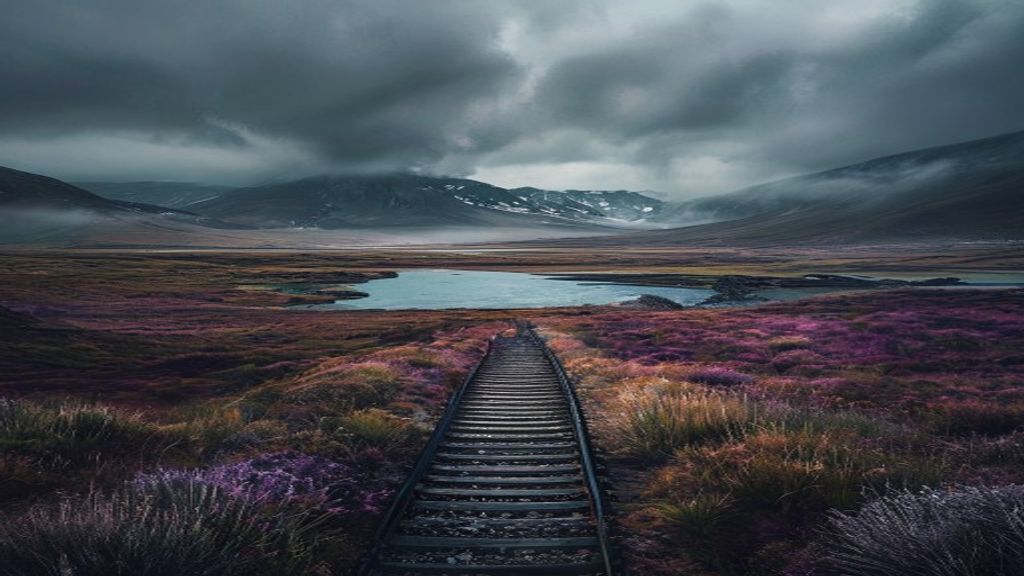
The train leaves Inverness before the morning has fully committed to being one. The platform is wet. The sky is the color of old pewter, uniformly flat and low, pressing down on the hills beyond the station with something that feels less like weather and more like intention. You find your seat. The heating ticks. And then, very slowly, Scotland begins.
The First Hour: Into the Moor
The suburbs dissolve almost immediately. Within minutes, the train has shed the city entirely and is moving through something vast and unadorned — the open moor, stretching away on all sides in every shade of brown and bronze and deep, wet green that the English language has never quite found adequate names for. Heather. Sedge. Peat. The ground here has texture like a painting applied with a palette knife, thick and deliberate.
The rain starts gently, the way Highland rain tends to — apologetically, almost — speckling the window glass in patterns that blur the landscape into something impressionistic. Through the water-streaked window, the hills look painted. Moody, slate-blue ridges recede into low cloud. A red deer stands motionless on a hillside, watching the train pass with an expression of absolute indifference.
Rannoch Moor: The Edge of the World
There is a moment somewhere past the Bridge of Orchy when the landscape crosses a threshold. It becomes something that the word wilderness doesn’t quite capture — wilderness implies the absence of civilization, but this feels like the absence of time. Rannoch Moor is forty square miles of bog, lochan, and sky, one of the largest and least-altered wildernesses in Europe. The railway crosses it on a floating bed of brushwood and peat, a Victorian engineering miracle that seems, from inside the carriage, like an act of pure audacity.
The lochs appear — small, dark, utterly still — scattered across the moor like dropped mirrors. Each one perfectly reflects the cloud above it, so that the landscape seems to exist in duplicate, the sky and the earth folding into each other. The horizon is gone. There is only depth.
Corrour: A Station at the Edge of Everywhere
Corrour Station has no road. There is no village, no car park, no shop. It is the highest mainline railway station in the UK, sitting at 1,350 feet in the middle of the moor, accessible only by this train or by walking. When the doors open — briefly, tentatively — the cold comes in like a physical presence. The air is clean in a way that city air never manages: thin and faintly peaty, carrying the mineral smell of the bog and the distant suggestion of snow from the peaks above.
The station building is painted white, startling against the dark moor. A single bench. A noticeboard with a laminated map of walking routes. The train waits for precisely two minutes, then the doors close, and Corrour is given back to the silence.
Arrival at Fort William: The Mountains Come Down
The final approach to Fort William brings the mountains close — very close. Ben Nevis reveals itself gradually, in pieces: a shoulder here, a cliff face there, the summit hidden in cloud until the very last moment when, just briefly, the grey shifts and the highest peak in Britain shows itself, snow-seamed and enormous, before the cloud draws back across it like a curtain.
The train pulls in. Journeys end. But the moor stays with you — that quality of light, that depth of quiet, that sense of having moved through something that does not notice or need you. The Scottish Highlands do not perform for visitors. They simply exist, vast and indifferent and completely, devastatingly beautiful.