The Slow Rain of Kyoto in November
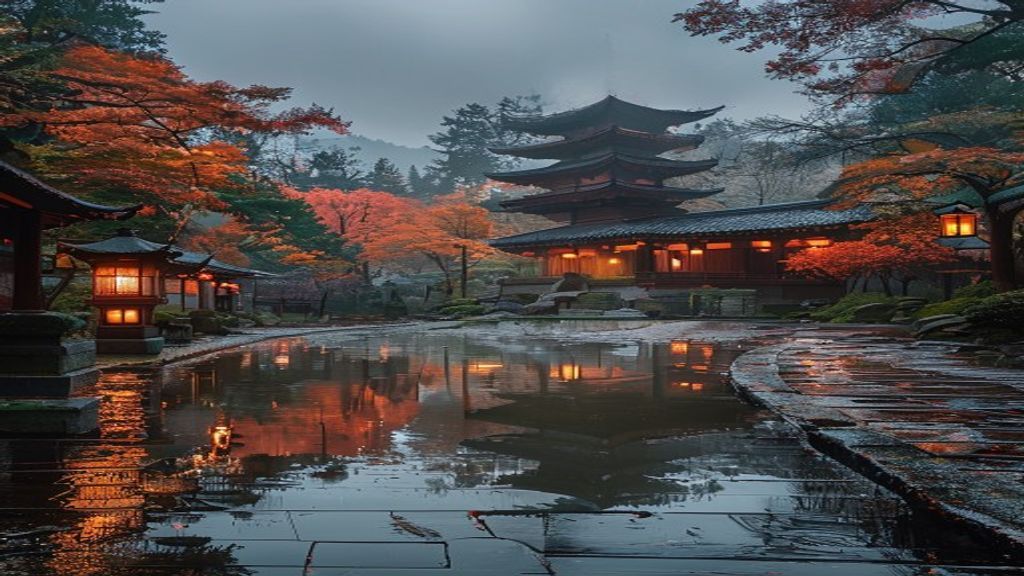
November brings a quiet fever to Kyoto — maples burning red against grey skies, temple rooftops beaded with rain, and a stillness that feels like the world pausing to remember something important.
The Slow Rain of Kyoto in November
November in Kyoto is not a season so much as a state of mind. The city — ancient, deliberate, almost shyly beautiful — seems to know what it is doing as the maples turn. It has done this for a thousand Novembers. It will do it a thousand more. And still, standing beneath a canopy of burning crimson leaves while a fine rain falls on the stone path ahead, you feel as though you are the first person ever to witness it.
That is the gift Kyoto gives. The illusion of discovery. The sensation of stumbling into beauty that was never meant to be stumbled into — and that, of course, was arranged for you all along.
Arashiyama Under Cloud
The bamboo grove at Arashiyama is better in the rain. This is not a popular opinion among the tour groups who arrive at 9 a.m. under blue skies, phones raised. But arrive early, arrive in drizzle, and the place becomes something else entirely. The bamboo — hundreds of culms climbing thirty meters overhead — goes silver-green in the diffuse morning light. The sound is extraordinary: the rain on ten thousand leaves overhead, a sustained whisper that is half percussion, half lullaby.
The path underfoot is dark and slick. Moss along the stone borders glows an almost electric green, the kind of green that doesn’t exist in drier climates. A small wooden bridge arcs over a stream gone grey-brown with rain. Somewhere behind the treeline, a temple bell marks the hour without urgency.
Eikan-dō at Dusk
Of all the temples that stage autumn’s finale, Eikan-dō earns its fame honestly. In late November, the hillside behind the temple is a slow detonation of red and gold — Japanese maple, momiji, in its final and most extravagant act before winter. At dusk, the temple lights are turned on and the reflection in the central pond doubles everything: the pagoda, the trees, the pewter sky.
You stand at the edge of the water. The reflection is almost more convincing than the thing itself. The maples above are vivid, borderline unreal, the color of embers moments before they go dark. A single leaf detaches and spirals down to the water’s surface, where it drifts with complete indifference to its own beauty.
This is the concept the Japanese call mono no aware — the bittersweet awareness of impermanence. Here, it does not need translating. You simply feel it, somewhere between the throat and the chest.
A Side Street in Gion
The Gion district, famous and photographed within an inch of its life, reveals a different texture on a rainy November evening. The main lanes empty early in the wet. But the side streets — narrow, cobbled, lined with the wooden lattice facades of machiya townhouses — hold their atmosphere like a cupped hand holds water.
Lanterns bleed orange light onto the wet stones. Reflections pool in every hollow. A single umbrella leans against a doorframe. The smell of charcoal and dashi stock drifts from somewhere unseen, and you realize you are hungry in a way that has nothing to do with food — hungry for more of this, more of the specific beauty of a rainy evening in a city that has been practicing refinement for fourteen centuries.
What November Asks of You
Kyoto in autumn asks only one thing: patience. Patience to wait for the crowds to thin. Patience to walk without destination. Patience to stand in the rain outside a temple gate while the maples drip and the light fails and the city settles into its evening self.
If you can manage that — if you can resist the urge to rush toward the next famous view — Kyoto will give you something better than a photograph. It will give you a moment that lodges itself permanently somewhere behind the eyes, retrievable for the rest of your life at will.
The rain. The red leaves. The sound of bamboo.
You were there.