Marrakech After Midnight
When the souks fall quiet and the lanterns take over, Marrakech reveals a secret version of itself — ancient, amber-lit, and utterly intoxicating.
Marrakech After Midnight
There is a version of Marrakech that most travelers never see. It arrives slowly, like the cooling of the air after sunset — a gradual softening of chaos into something more intimate, more honest. By midnight, the city has shed its daytime performance and settled into itself.
The Souks Exhale
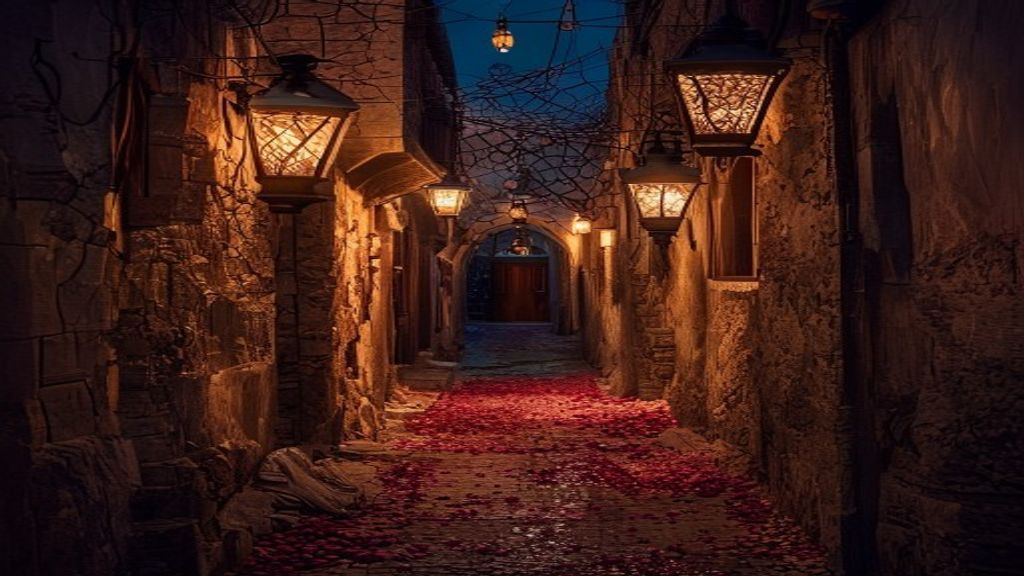
By eleven o’clock, the last of the vendors have folded their wares into shadow. The souks — those impossible labyrinths of leather and spice, brass and silk — grow still. Alleyways that hours ago pulsed with the calls of merchants now carry only the faint echo of your own footsteps on ancient stone. The smells remain: dried rose petals, cumin, the ghost of cedar wood and charcoal smoke. You don’t need a map here. You need only to let the city lead you.
The walls of the medina glow terracotta in the lamplight, warm and improbable against the deep indigo sky above. A cat moves through a doorway like a rumor.
Djemaa el-Fna in the Small Hours
The great square does not sleep so much as dream. The food stalls have gone cold, their smoke dissolved into the night, but the square breathes on. A lone musician sits on an overturned crate, drawing something mournful and beautiful from a guembri, the three-stringed lute that carries the memory of the Sahara in every note. The sound moves across the emptied plaza like water across tile.
Above, the minaret of the Koutoubia Mosque rises against a sky bruised purple and dusted with stars rarely visible during the haze of the day. Its proportions are so perfect they seem not built but grown — the way a tree grows, without apology, toward light.
A Riad at 2 a.m.
To return to a riad in the deep hours is to understand why these inward-facing homes were invented. The city outside is all surface and stimulation. But step through the low wooden door, cross the threshold, and the courtyard opens upward like a held breath finally released. The fountain at the center murmurs. Zellige tilework — cobalt, white, saffron — catches the moonlight filtering down from the open sky above.
Orange blossom. That is the smell. It arrives without announcement, as the best things in Marrakech tend to do.
You sit beside the fountain for a long time. There is no particular reason to move. The water doesn’t stop; neither do you want it to. Somewhere deeper in the medina, a door closes. A dog answers some private question with a single bark, then is quiet.
What the City Keeps
Marrakech in daylight is a city that gives generously — color, noise, flavor, friction. But the Marrakech that exists after midnight is what the city keeps for itself. It is older, slower, and more generous still. It asks nothing of you but your presence.
Come without agenda. Come without a full itinerary. Come willing to sit with the particular magic of a place that has been trading, praying, and dreaming in this exact spot for nearly a thousand years. Let the lanterns do their work. Let the fountain keep time.
By the time the first call to prayer unravels across the rooftops just before dawn — a sound so human and so vast it seems to come from the sky itself — you will understand that you have not simply visited a city.
You have been inside something alive.