Lisbon After Rain: The City That Smells Like Longing
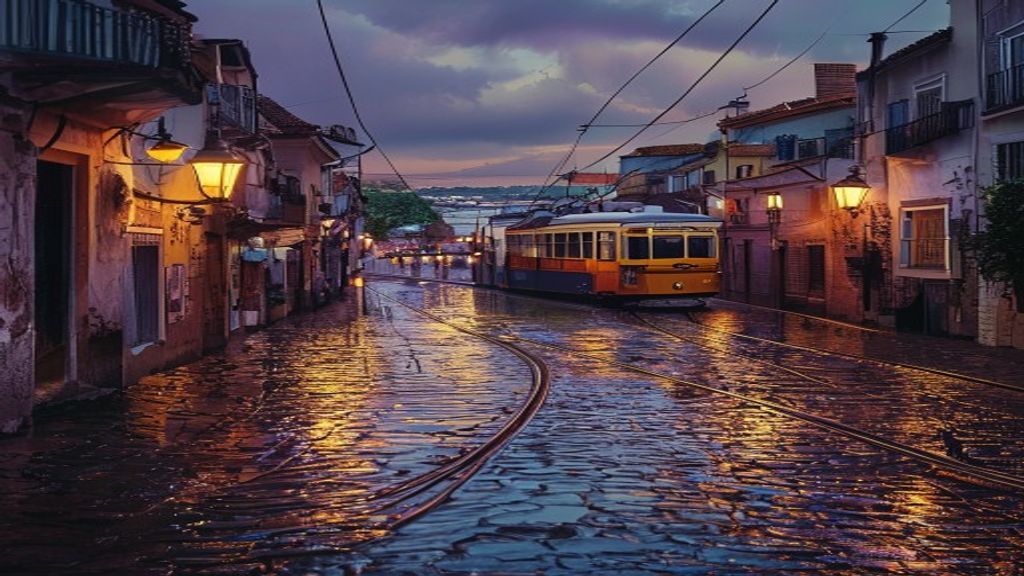
When the Atlantic storms pass over Lisbon, they leave behind a city more beautiful than any postcard — wet cobblestones glowing like mirrors, the scent of petrichor and sea salt threading through every alley. This is Lisbon at its most honest.
There is a Portuguese word — saudade — that has no true English translation. It means something like a bittersweet longing for something beloved and lost, or perhaps never fully possessed. Spend one evening in Lisbon after a heavy rain, and you will stop needing a translation.
The Hour the Streets Turn to Silver
It happens slowly, the way all beautiful things do. The storm moves out over the Tagus, dragging a curtain of grey inland and leaving the sky bruised orange and violet at its edges. The cobblestones of Alfama — those hand-laid calçada portuguesa tiles, black and white and ancient — hold the rain in their seams like cupped palms. Every streetlamp becomes two streetlamps: one above, one below, trembling on the wet stone.
You walk and the city rings beneath your feet. Each step is a small, wet percussion. The trams have retreated somewhere warm. Laundry lines hang slack and dripping between ochre walls. A tabby cat watches you from a windowsill, utterly unbothered, its fur somehow dry.
The Viewpoints, Without the Crowds
Climb to the miradouros — the city’s famous overlook terraces — in the hour after rain, and you will have them nearly to yourself. At Miradouro da Graça, the terracotta rooftops cascade downhill like a slow wave breaking toward the river. The Tagus beyond is the color of pewter softening toward silver. On a clear night you can see the Cristo Rei statue across the water, arms spread wide, and the April 25th Bridge strung with lights like a borrowed San Francisco dream.
Steam rises from the warm tiles. The air carries fado on it — not from any speaker but from somewhere deeper, some architectural memory this city keeps in its walls.
Cervejaria at Midnight
Down the hill, down the steps — always more steps — a cervejaria is still open. Its windows are fogged from within. Inside: the amber gleam of beer glasses, a counter tiled in blue azulejo, a man in an apron who greets you with the particular warmth of someone who has never once needed to fake it.
You order bacalhau à brás without looking at the menu. It arrives in a small cast-iron pan, golden with egg and potato, the salt cod folded through it like a whisper. Outside, rain begins again. You are in no hurry. That is the entire lesson Lisbon has been trying to teach you since you arrived.
The Morning After
By morning the city is washed clean and luminous. The Alfama hillside glitters. Street vendors arrange pastéis de nata in rows behind steamed glass, their crusts still blistered from the oven. An old tram — yellow, creaking, magnificent — hauls itself up the hill on its ancient iron rails.
You take no photos. Some mornings, the eye is enough.
Lisbon does not want to be captured. It wants to be felt — in the ache of the calves climbing its hills, in the salt on the lips, in the fado that finds you even when no one is singing. It is a city built on the edge of the known world, still leaning out over the Atlantic, still longing for something it cannot name.
You leave a little bit of yourself behind in those cobblestones. That is the toll Lisbon charges. Everyone agrees it is worth it.