Kyoto in the Rain
When the skies open over Kyoto's ancient temples and moss-laden gardens, the city doesn't retreat — it deepens, revealing a quieter, more honest version of itself.
Kyoto in the Rain
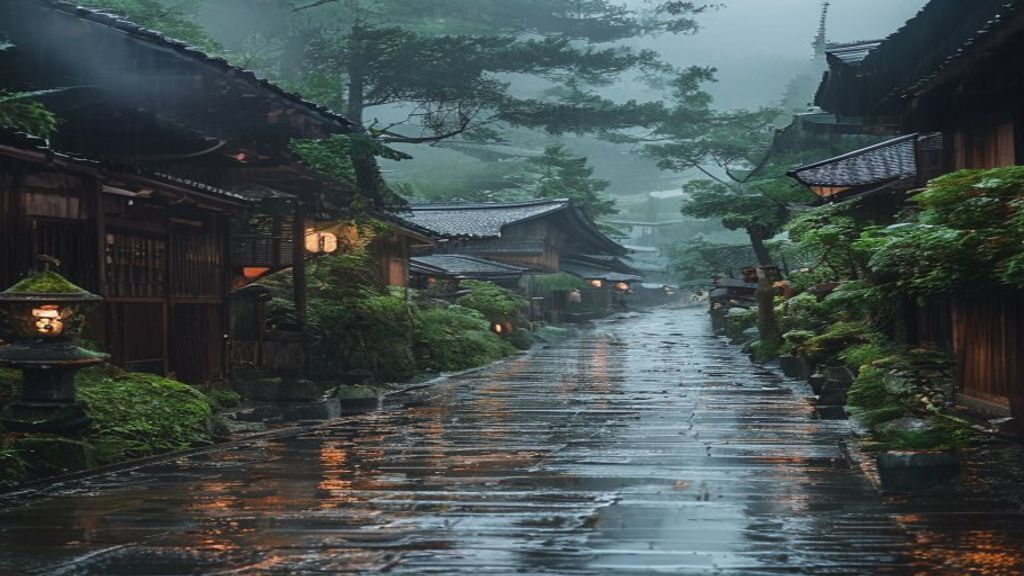
There is a version of Kyoto that the guidebooks rarely mention. Not the city of cherry blossoms and golden pavilions burnished by a perfect afternoon sun — but the city that exists between the drops, when grey clouds press low over the hills and the stone lanterns along Philosopher’s Path are dark with moisture. This is Kyoto unguarded. Kyoto, breathing.
The Hour Before the Tourists Arrive
It begins before dawn. The streets of Higashiyama are entirely empty, their ancient cobblestones slick and gleaming like the back of a river. Shop curtains hang heavy with rain. The wooden facades of the machiya townhouses — those long, narrow merchant homes that have lined these lanes for centuries — have turned the colour of charcoal, every grain of the timber drawn out in sharp relief by the wet.
You walk and the sound of the city is nothing but water. Water falling from curved tile rooftops. Water rushing through stone gutters carved so long ago that moss has colonised every edge. Water tapping against the paper panels of a lantern outside a shuttered tea house, rhythmic and patient as a monk at prayer.
Inside the Temple Grounds
At Nanzen-ji, the great sanmon gate looms through the mist like something dreamed rather than built. The enormous wooden columns, each one a single ancient cedar, are darkened to the colour of midnight. Beyond the gate, raked gravel gives way to a sea of moss so impossibly green under the rain-soft light that it seems to vibrate, to hum with its own quiet frequency.
A stone garden here does something remarkable in the rain. The carefully placed rocks — chosen for their character, their weight, their silence — appear to rise from the gravel as islands rise from a grey ocean. The rain erases the boundary between the intentional and the eternal. You cannot say where the garden ends and the world begins.
Crows call from the cryptomeria trees. Their sound is blunt and grounding, a reminder that beauty here does not ask for reverence. It simply exists.
Fushimi Inari Under Cloud
The thousand torii gates of Fushimi Inari glow differently when the sun hides. Without direct light, the vermillion lacquer deepens to something closer to rust, closer to blood — ancient and serious. You climb the mountain path alone. Each gate frames the next, a tunnel of colour disappearing into the cedar forest ahead.
The rain has kept everyone away. What is normally a procession becomes a pilgrimage. Your footsteps on the stone are the only percussion. Somewhere far below, the city of Kyoto — four million people, their trains, their lives — exists in a world that feels entirely separate from this one.
At the upper shrine, offerings left by the faithful have been softened by the rain. A tangerine, vivid orange against grey stone. A small sake bottle, its label dissolving. Tiny fox statues — the messengers of Inari, the rice god — stand sentinel in the mist, wearing small red bibs now dark with moisture.
The Gift of Bad Weather
Every traveller wants the golden hour. The clear skies, the warmth, the postcard light. But rain is the great gift that tourism cannot fully commodify. Rain empties the famous places. Rain slows you down, forces you under awnings, into tea houses, into conversation with a shopkeeper who has nothing to do but tell you the name of the tree outside her door.
In Kyoto, rain does something else, too. It aligns you with everything that has come before. For over a thousand years, monks have walked these same paths in weather just like this. Emperors have looked from wooden verandahs at gardens receiving the same grey sky. The rain is a thread connecting you across all that time, stitching your moment into the long, quiet fabric of this place.
Leave your umbrella at the hotel. Let the city touch you. The real Kyoto is waiting, just past the point where most people turn back.