Kyoto in the Rain: Where Silence Has a Sound
When clouds swallow Kyoto's temple rooftops and the cobblestones turn to dark mirrors, the ancient city reveals something it hides from sunny-day tourists — a soul that breathes.
There is a particular kind of quiet that only rain can make. Not the absence of sound, but a softening of it — as if the world has pulled a silk curtain between itself and everything loud. Kyoto understands this quiet intimately. It has been practicing for over a thousand years.
Arrival: The City Before the City Wakes
The train from Osaka slides into Kyoto Station just before six in the morning, and the rain is already here before you are. It taps on the platform’s great arching roof like a polite guest — insistent, but never rude. Outside, the streets are the color of pewter, and the neon signs of closed ramen shops bleed their reds and yellows into the wet pavement. This is the version of Kyoto that belongs to no one. No tour buses. No selfie sticks. Just the city, breathing.
You pull your jacket tighter and let the streets lead you north, toward Gion. Your footsteps echo off old wooden machiya townhouses whose facades seem to absorb the rain, darkening from honey to mahogany. A cat — inevitable, always a cat — watches you from beneath a paper lantern, blinking slowly, entirely unmoved by the weather.
Fushimi Inari: The Gates After the Tourists Leave
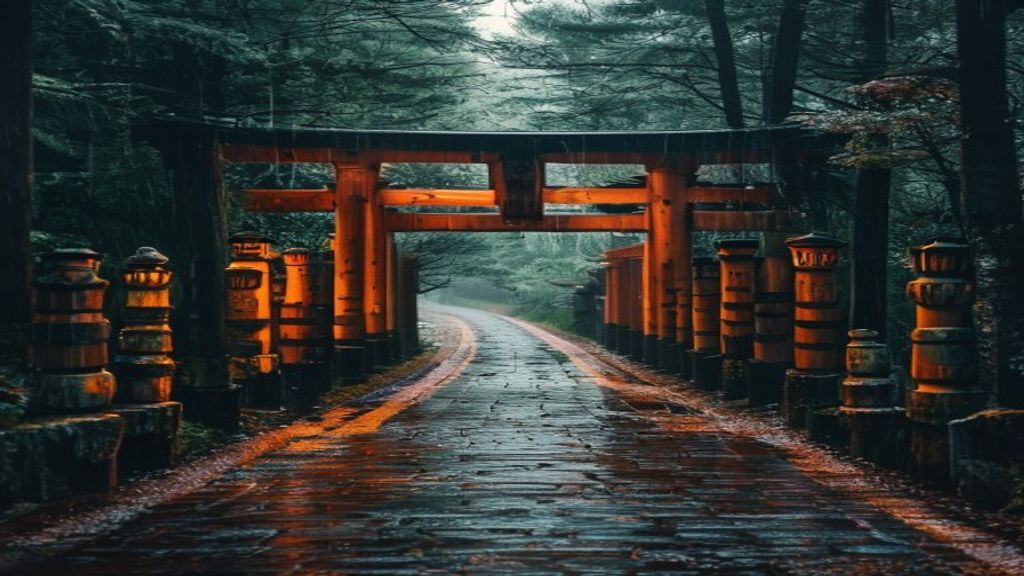
By the time you reach Fushimi Inari, the rain has found its rhythm. The thousands of vermillion torii gates tunnel upward into the forested mountain, and each gate drips in perfect sequence, a kind of percussion that has nothing to do with music and everything to do with time. The lacquered wood is almost phosphorescent in the grey light — a deep, burning orange against the green-black of the cedar forest.
Water runs in thin silver threads down the carved kanji on each gate post. Moss has colonized the stones between the path’s edges, impossibly green, as if the rain had painted it there this very morning. The fog sits at the middle distance, erasing the upper trails, making the mountain feel infinite. You don’t need to climb to the summit. The suggestion of it is enough.
Philosopher’s Path: A Canal, a Philosophy, a Season
The canal alongside Philosopher’s Path runs fast today. Cherry blossoms came and went weeks ago, but the path still carries their memory in the way the light falls through newly leafed branches, dappling the water in shifting greens. Stone lanterns lined along the bank are dark with moisture, their bases furred with delicate moss. A single paper umbrella, forgotten or abandoned, leans against a wooden fence post — coral pink, wildly cheerful against all that grey.
This is the path where the philosopher Nishida Kitaro walked every morning, working through the architecture of his thoughts. It is easy to believe that rain made him wise. There is something about walking in the rain — the way it narrows your world to just the next few meters, the smell of wet earth and cedar and old stone — that focuses the mind like nothing else.
Evenfall: Lanterns on the Kamo River
By dusk, the rain has softened to a mist so fine it is more feeling than fact. The Kamo River runs wide and quick, and along its banks, the paper lanterns of the restaurants that line Pontocho Alley have begun to glow — amber and gold, reflected in the water below in long, wavering columns of light. Herons stand motionless at the river’s edge, grey statues who have decided the rain is simply part of their design.
You find a low wooden seat at a riverside restaurant, order tofu simmered in dashi and a small flask of warmed sake, and watch the city go soft around the edges. Kyoto in the rain is not a compromise. It is not the second-best version of the trip you planned. It is the place finally being honest with you — showing you not the postcard, but the poem.
And the poem, it turns out, is better.