Kyoto in the Rain: When the Old City Breathes
A rainy afternoon in Kyoto strips the city of its crowds and reveals something ancient and unhurried — moss-slicked stone, temple smoke, and the sound of water finding its way home.
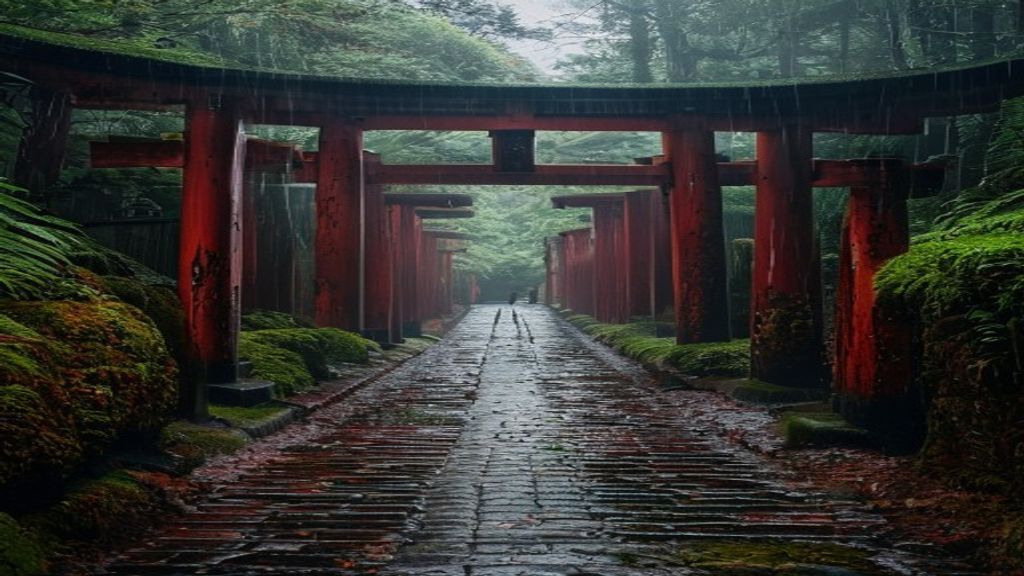
There is a version of Kyoto that only the rain knows.
Most visitors arrive in cherry blossom season, under blue skies crowded with color. They photograph the same torii gates, the same bamboo corridors, the same gilded pavilion doubling itself in still water. But come in April when the clouds roll in low and grey off the mountains — come when the rain begins to fall in long, patient curtains — and the city becomes something else entirely. Something older. Something that remembers.
The Temple at First Light (Grey Light)
Fushimi Inari before 7 a.m. on a rainy morning is one of the quietest places on earth. The ten thousand vermillion gates march up the hillside in rows so dense they form a tunnel, and the rain moves through them like breath. Each gate is lacquered so deeply that the wet surface seems to glow from within, a slow ember-red against the charcoal sky. Moss has crept up the bases of the older ones, claiming them softly, the way time claims everything in Kyoto — not with violence, but with patience.
The stone foxes at the base of the path, guardians of the rice god Inari, wear small red bibs that darken in the rain. Their expressions are inscrutable. They have been watching pilgrims climb this hill for twelve hundred years. They are in no hurry.
Steam and Silence on Ninenzaka
By mid-morning, the cobblestoned lane of Ninenzaka is washed clean and almost empty. A few paper umbrellas move through the frame like slow brushstrokes — one persimmon orange, one ink black. The wooden machiya townhouses lean toward each other above the lane as if sharing a quiet confidence. From one shop, the smell of roasting hojicha tea drifts out into the wet air, nutty and warm and deeply comforting, and it is impossible not to pause, not to breathe it in, not to feel for a moment that you have arrived somewhere you were always meant to be.
The puddles on the uneven stones hold small, trembling skies.
Afternoon in Arashiyama
At the bamboo grove on the western edge of the city, the rain does something remarkable. It turns the sound up. Each drop strikes a hollow stalk and the whole grove becomes a low, resonant percussion — not loud, but layered, a thousand soft notes stacking into something that feels almost like music. The bamboo columns rise thirty feet overhead, pale green fading to grey at the canopy, swaying just slightly in the wet wind. The light is diffuse, directionless, the color of old jade.
A single stone lantern at the grove’s edge wears a cap of dark moss. Water runs down its carved face in thin rivulets, tracing the grooves of the kanji carved there decades ago. The translation, you are told later, is something like: a moment of stillness is worth a thousand miles of travel.
You believe it.
Evening Falls on the Kamo River
By dusk, the rain has softened to a mist so fine it is barely rain at all. The Kamo River runs fast and brown between its wide banks, carrying the city’s afternoon downstream toward Osaka and the sea. The stone embankments are empty save for a row of herons standing in the shallows with the absolute composure of monks. They do not look up.
Across the water, the first restaurant lanterns are beginning to glow. Their light catches the mist and diffuses into halos of amber and gold, and the reflection on the river’s surface shakes with the current, a loose, living painting. Somewhere nearby, a temple bell rings once — a sound so round and final it seems to mark the end of not just a day, but an era.
You walk back through streets that are glossy and luminous, every surface a mirror for the lights above. Kyoto in the rain does not show you its face. It shows you its interior — patient, layered, ancient, and utterly, unhurriedly itself.