Kyoto in the Rain: When the City Exhales
A moody, meditative journey through Kyoto's ancient streets during monsoon season, where rain transforms temples, bamboo groves, and stone lanterns into something otherworldly. This is Kyoto stripped of its performance — raw, dripping, and deeply alive.
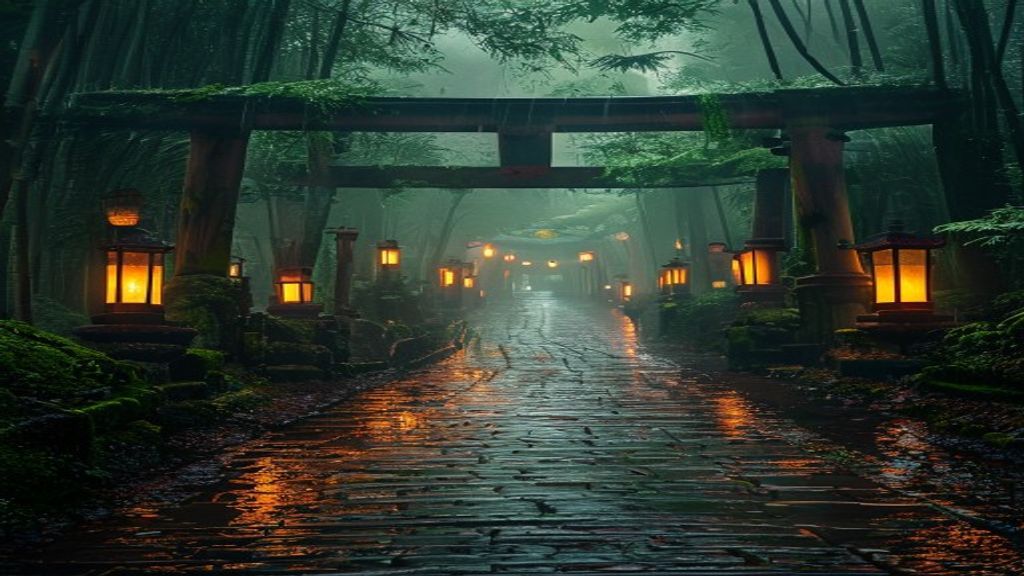
There is a version of Kyoto that exists only in the rain. Not the Kyoto of travel brochures — the one bathed in cherry blossom pink or lit by autumn’s copper fire — but a quieter, older city that surfaces only when the clouds lower themselves onto the mountains and the streets begin to hiss.
This is that Kyoto.
Arrival: The City Breathing In
You smell it before you see it. The wet cedar of old machiya townhouses, the mineral sharpness of ancient stone, the green exhale of moss that has been waiting all summer for exactly this moment. Rain in Kyoto doesn’t feel like an inconvenience. It feels like a revelation.
The covered arcade of Nishiki Market drips at its edges like a watercolor left out overnight. Vendors move unhurriedly. A woman arranges lacquered bento boxes with the focus of someone arranging altarpieces. Steam rises from vats of tofu in dashi broth. The market’s neon glows diffuse and warm, smeared across the wet cobblestones in long amber ribbons.
Fushimi Inari: The Thousand Gates in Grey
The famous vermillion torii gates of Fushimi Inari are a cliché until you see them in the rain — and then they are something else entirely. Water beads on the lacquered wood and falls in tiny cascades from the eaves of each gate. The path narrows as it climbs, and the forest closes in. Moss carpets every stone. Lanterns wear halos of mist.
Higher up, the crowds dissolve. A fox shrine emerges from the fog — Inari’s sacred messenger, ears pointed, stone eyes patient. The air smells of cedar, rain, and incense. You stop. You listen. The mountain breathes around you, slow and enormous.
This is what the gates were always guarding.
Arashiyama: Bamboo and Silence
In Arashiyama, the bamboo grove is a cathedral. In the rain, it becomes a cathedral filled with music. Each stalk catches droplets and shuttles them downward in clicking, percussive streams. The light inside the grove is jade-green, filtered through ten thousand swaying columns. The sound is total — a soft, continuous roar that somehow deepens the silence rather than breaking it.
Beyond the grove, the Oi River runs silver-brown and swollen. A lone fisherman in a yellow slicker stands motionless in the shallows. Herons occupy the sandbars like grey philosophers. The Togetsukyo bridge disappears halfway across into fog, and you realize that Kyoto — even now, even in this dripping present — is always half in another world.
Evening: The City Breathing Out
By dusk, the rain has slowed to a fine drizzle — what the Japanese call kirisame, mist-rain, the kind that barely falls at all. The stone lanterns of Gion begin to bloom with flame. Paper umbrellas bob along Hanamikoji Street. The wooden facades of the ochaya teahouses gleam dark as lacquer.
You find a counter seat at a tiny izakaya, the kind with six stools and a handwritten menu. The owner pours cold Fushimi sake without being asked. Outside, the ancient city goes on doing what it has always done — surviving beauty, surviving time, surviving you and every other traveler who came hoping to take something home.
But Kyoto keeps its secrets in the rain.
It holds them in the moss, in the stone, in the slow drip from a thousand-year-old eave, falling into a puddle that reflects — just for a moment — the whole wet, luminous sky.