Kyoto in the Rain: A Temple Town Slows to a Whisper
When a steady rain descends on Kyoto's ancient streets, the city doesn't retreat — it transforms, revealing a quieter, more intimate version of itself wrapped in moss and mist.
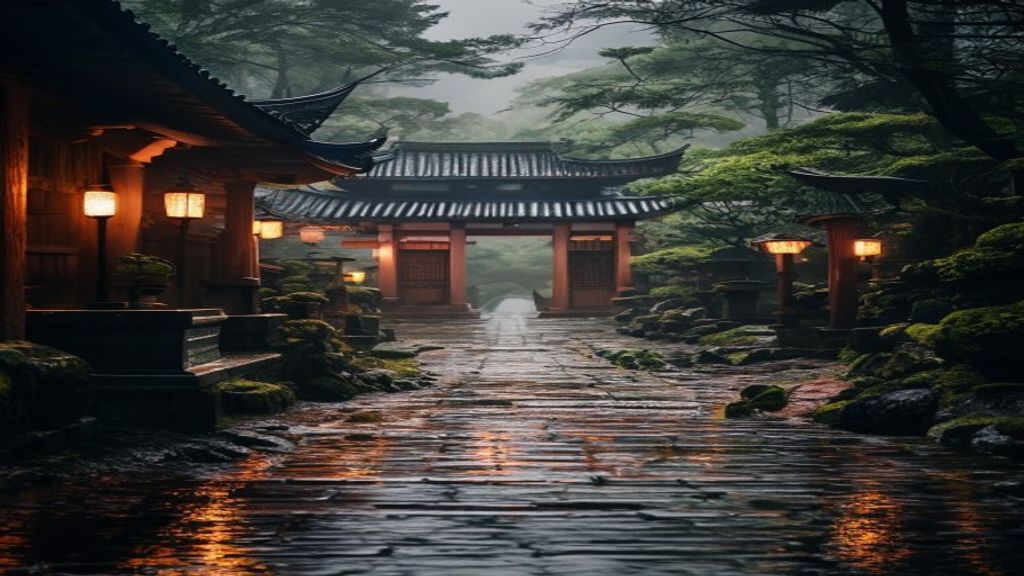
There is a particular kind of silence that only rain can bring to a city. Not the silence of emptiness, but of everything pausing to listen.
In Kyoto, that silence has a texture.
The Walk to Fushimi Before Dawn
It begins at 5:47 a.m. The sky hasn’t decided what color it wants to be. Gray, mostly — the deep, contemplative gray of old ink on wet paper. The cobblestones along Ninen-zaka are slick and dark, reflecting the amber glow of stone lanterns that haven’t yet been extinguished for morning. Somewhere above the rooftiles, a crow calls once and doesn’t repeat itself.
Your umbrella does little against the mist. It doesn’t matter. The mist is the point.
By the time the first torii gate appears at Fushimi Inari, the rain has settled into a steady, meditative rhythm. The vermillion pillars are deeper red when wet — a red that feels ancient, ceremonial, like the color of something that has always been here and always will be. Water runs in thin rivulets along their bases. Cedar trees lean over the path, heavy with rain, releasing the smell of something between forest and incense.
There are no crowds at this hour, in this weather. There is only the endless tunnel of gates, disappearing up into the mountain, and the sound of your footsteps, and the rain.
A Tea House, a Window, and the Garden Between
By mid-morning, you’ve found shelter in a machiya tea house tucked inside the walls of a temple complex whose name you didn’t catch. It doesn’t matter. You’re not here for names today.
The tatami is cool beneath your knees. The matcha arrives in a wide ceramic bowl — the color of a forest after rainfall — and you wrap both hands around it the way you’d hold something precious. Steam rises and mingles with the cold air drifting through the shoji screen, left open just a crack to let the sound of the garden in.
Outside: a stone lantern wearing a small white cap of standing water. Moss so green it looks painted. A single maple tree, its leaves turned the color of embers, each one holding a perfect bead of rain at its tip. The drops fall in no particular hurry.
You think: this is what people mean when they say wabi-sabi. Not the philosophy. The feeling.
Evening: Gion Flickers to Life
By dusk, the rain has softened to a haze rather than a fall — the kind that blurs the edges of things, that turns every lantern into a watercolor smear of gold. Gion’s narrow lanes glow amber and rose. The wooden facades of the ochaya are lacquered by the wet, their latticed windows exhaling warm light into the blue-dark street.
A wooden gate swings open and closed in the breeze, creaking once. From somewhere deeper in the district, the plucked note of a shamisen drifts out and dissolves before it reaches you.
You stop beneath the eaves of a small flower shop, already closed for the evening, its shutters down but a single arrangement left in the window — white chrysanthemums in a celadon vase. They seem to glow from inside.
The street reflects everything: the lanterns, the lacquered facades, the pale blur of your own face looking down at it all. You stay longer than you need to. The rain stays with you.
What the Rain Gives You
Kyoto in fair weather is magnificent. Kyoto in the rain is yours.
The city strips down when it rains. The tour buses dissolve. The photo lines at the bamboo grove vanish. What remains is the essential city — the smell of cedar and earth and old stone, the sound of water finding its way through centuries-old gutters, the way time moves differently under a low, pewter sky.
You leave with wet shoes and a full heart. You leave wanting to come back in the rain.
You always do.