Kyoto in the Rain: A Temple Town Breathing Slowly
When the rain falls on Kyoto, the ancient city doesn't retreat — it deepens, drawing pilgrims and moss and lantern-glow into something quietly sacred. A journey through wet stone paths, cedar smoke, and the unhurried pulse of a city that has been beautiful for a thousand years.
Kyoto in the Rain: A Temple Town Breathing Slowly
There is a particular kind of morning in Kyoto that belongs entirely to the rain. Not a dramatic storm — nothing theatrical — just a fine, persistent drizzle that descends like breath on cold glass, softening every edge, deepening every color. It is the kind of morning that makes the city reveal itself.
The Path to Fushimi Inari Before Anyone Arrives
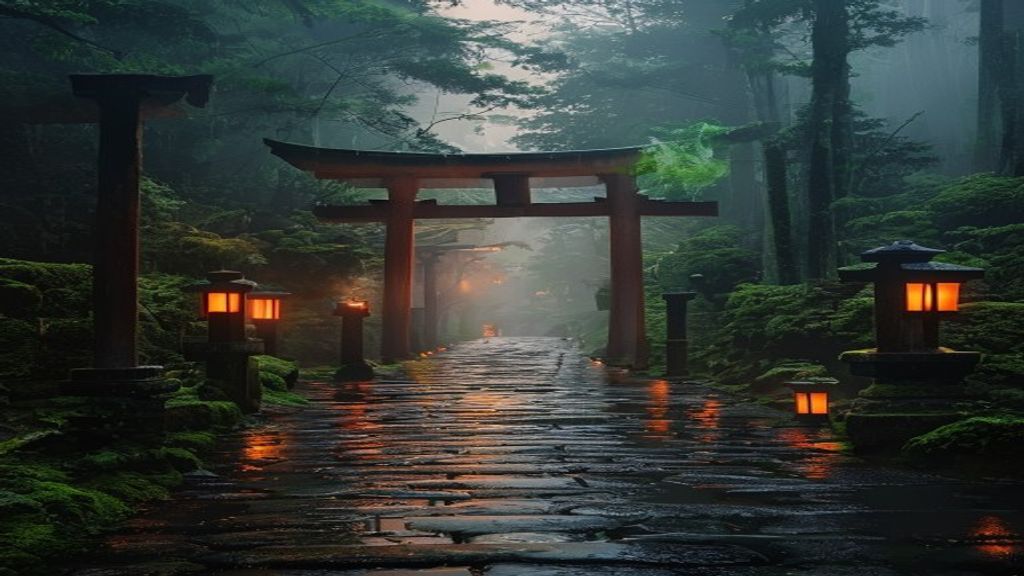
The stone steps leading up toward the torii gates are dark and slick before 6 a.m. The thousand vermillion gates, which in afternoon light feel festive and almost commercial, become something else entirely in the grey pre-dawn mist. They recede into the cedar forest like a corridor in a dream — each gate framing the next, the next, and another beyond that, until they dissolve into green fog and you begin to feel less like a tourist and more like a question asking itself.
The rain taps softly on cedar boughs overhead. Somewhere behind you, a crow calls once and does not repeat itself. Your sandals find their grip on wet stone, and you realize you’ve been holding your breath.
Gion’s Stone Lanes After the Rain Begins
By mid-morning, Gion’s cobblestone lanes are glazed with shallow rivers of rainwater that carry reflections of paper lanterns and lacquered doorways. The wooden machiya townhouses — narrow-fronted, deep-running — exhale warmth from somewhere within. A florist arranges peonies in a bucket just inside a shadowed entranceway. The flowers are the most saturated color you’ve seen all week.
There is no performance here. The beauty is structural, earned over centuries of knowing what to keep and what to let weather away.
You duck beneath an overhanging eave as the drizzle quickens. Another traveler appears, does the same, and you share a few minutes of wordless, companionable shelter. This, too, is Kyoto.
The Temple Garden at Midday: Grey Skies, Green Moss
At Ryoan-ji, the famous rock garden looks nothing like its photographs. Better, somehow. The raked gravel is darker, heavy with moisture, and the fifteen stones sit in their inscrutable arrangement without apology. The moss at the garden’s margins is almost obscenely green — the kind of green that only exists in places where it rains regularly and no one rushes.
An elderly monk crosses the covered walkway behind you, unhurried, his robes the color of storm clouds. He doesn’t glance at the garden. He has made his peace with it long ago. You haven’t, and that, you think, is exactly why you came.
Lantern Light on Wet Stone: Evening in Higashiyama
By dusk the rain is barely a suggestion, more feeling than fact. The stone-paved lanes of Higashiyama district fill with a soft amber light from paper lanterns hung at even intervals along the storefronts. The shops — selling matcha sweets, hand-turned ceramics, folded fans — glow like small theaters behind their sliding screens.
You stop at a tea house where a woman in a quiet grey apron sets a bowl of matcha before you without ceremony. The tea is the color of new leaves. The bowl, slightly imperfect at the rim, warm in your palms, feels like it was made to fit exactly your two hands. The rain has paused. The city breathes.
A Note on Arriving Slowly
Kyoto rewards the unhurried. It rewards the traveler who has given up on itineraries by day two, who lingers at threshold and gate, who accepts rain not as inconvenience but as collaborator. The city has been beautiful in this particular way — layered, lacquered, mossy at its edges — for longer than most nations have existed.
When you leave, the shinkansen will carry you away with almost offensive speed. You will press your forehead to the cold window glass and watch the city dissolve into rice fields and grey sky. You will already miss the sound of rain on cedar. You will already be planning to return.