Kyoto in the Rain: A City That Breathes
When rain falls on Kyoto, the ancient city doesn't retreat — it transforms, revealing a quieter, more intimate version of itself that few travelers ever witness.
There is a version of Kyoto that belongs only to those willing to step out into the grey.
Most visitors arrive clutching itineraries and umbrellas folded tight, cursing the forecast. But rain in Kyoto is not an inconvenience. It is an invitation — to slow down, to listen, to let the city speak in its oldest voice.
The Hour Before Dawn, Fushimi Inari
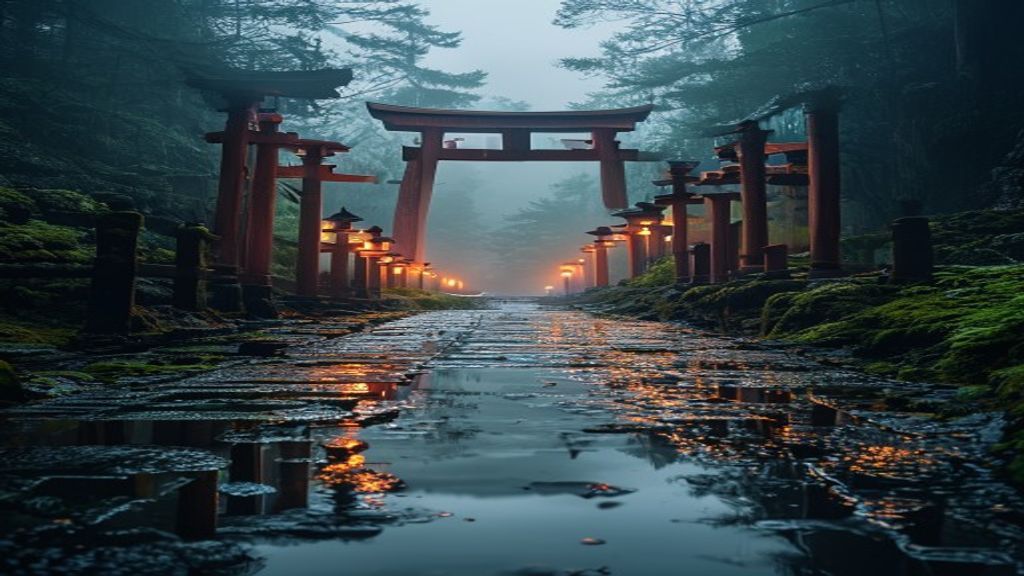
The vermillion torii gates drip in the dark. Standing at the base of Fushimi Inari at 5 a.m. on a wet May morning, the only sound is water: the soft percussion of drops on lacquered wood, the trickle of rivulets finding paths between moss-covered stone steps. The gates glow amber in the low light, their reflections pooling in shallow puddles on the path ahead.
The cedar forest above breathes out. Mist clings to the hillside like something alive. You begin climbing.
There are no crowds at this hour, only the distant toll of a temple bell carried on the damp air, and the occasional rustle of something unseen moving through the undergrowth. Every hundred steps deeper into the mountain, the city falls further away. By the time you reach the first summit shrine, Kyoto is invisible below — swallowed by cloud and rain and distance.
Afternoon Light on the Philosopher’s Path
By midday, the rain has softened to a mist so fine it feels more like weather than precipitation. The Philosopher’s Path runs alongside a narrow canal edged with stone lanterns and cherry trees, their May leaves now a deep, saturated green after weeks of rain. The canal moves slowly, carrying fallen petals in lazy spirals.
The path earns its name on days like this. Each footstep on the wet stone feels deliberate. The mind quiets. Machiya townhouses lean over the canal, their dark timber facades darkened further by moisture, paper screens glowing faintly gold from the warmth within. A cat sits motionless on a wooden gate, indifferent to the rain, watching the water.
You understand, walking here, why Nishida Kitarō found philosophy on this very path a century ago. Something about rain and repetition loosens the thoughts.
Gion at Dusk: Cobblestones and Candlelight
As evening arrives, Gion district transforms into something from a woodblock print. The stone-paved alleys of Hanamikoji glisten under paper lanterns that swing gently in the wet breeze. The ochaya — teahouses — keep their doors mostly closed, but thin slivers of warm light escape beneath wooden blinds.
The smell here is particular: old wood, damp earth, charcoal smoke from a nearby kitchen, and something floral that might be incense or might simply be the soaked garden of a hidden machiya. You crouch to photograph a lantern reflected perfectly in a puddle between two cobblestones. The image is almost too composed to be real.
Above, the cloud ceiling has lowered further, pressing the glow of the city back down onto its own streets. Kyoto has always understood impermanence — mono no aware, the bittersweet beauty of things that pass. Rain is just another expression of that philosophy.
What the City Keeps
Kyoto reveals itself in layers, and rain is the solvent that strips away the outermost one. Beneath the tourism, beneath the carefully preserved façades, beneath the ten thousand visitors a day who photograph the same gates — there is a city that has been quietly absorbing time for over a thousand years.
You feel it most on a wet evening, walking alone down an alley that hasn’t changed in two centuries, listening to rain on tile rooftops, watching steam rise from a street-level kitchen grate. In that moment, the gap between past and present narrows to almost nothing.
The rain falls on all of it equally. That feels important, somehow.