Kyoto in the Hour Before Temples Wake
Before the crowds arrive and the incense is lit, Kyoto belongs only to the mist, the moss, and the particular hush of a city that has been sacred for a thousand years.
Kyoto in the Hour Before Temples Wake
Set your alarm for an hour that feels like transgression — 4:45 a.m. — and step into a Kyoto that most visitors never see. The streets are coal-dark and cool, the air carrying the mineral sweetness of the Kamo River and the faint char of last night’s restaurant grills. You will feel briefly, magnificently alone in one of the most visited cities on earth.
This is the gift Kyoto offers those willing to wake for it.
Arashiyama Before the First Bus
The bamboo grove at Arashiyama in July light at 5 a.m. is not the place in the photographs — or rather, it is that place, but stripped of everything transactional and given back to itself. The stalks rise thirty meters overhead in columns of pale green-gold, swaying in a breeze too gentle to feel on your skin but clearly felt by them. The sound is extraordinary: a deep, continuous creak and whisper, like a great wooden ship at anchor.
Dew runs down each culm in single bright threads. The path is empty. Your footsteps sound too loud. You slow down instinctively, the way you would in a library, or a chapel.
Moss covers the roots at the grove’s edge in a luminous, almost radioactive green — the specific green of Kyoto, found nowhere else on earth with quite this intensity. It absorbs the dim early light and gives it back transformed, softer, more interior.
Fushimi Inari at First Light
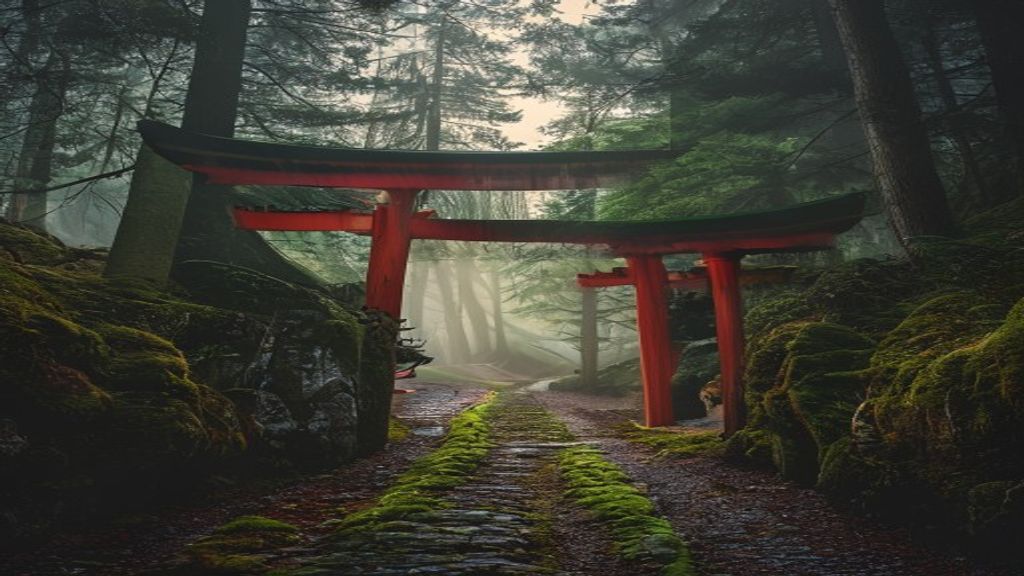
A thousand torii gates march up Mount Inari in corridors of vermilion that glow almost orange in the angled dawn light. The paint — a red derived from mercury, used to ward off evil and mark sacred space — has been renewed on these gates for over a millennium. Some still bear the calligraphed names of the merchants and companies that donated them, the ink faded to a whisper.
At 5:30, a single Shinto priest climbs the path ahead of you in white robes and a black lacquered hat, unhurried and utterly absorbed in his own ancient continuity. He does not acknowledge the gates, because to him they are simply the furniture of the sacred — as unremarkable and essential as the air.
The forest between the gates smells of cedar, damp earth, and something resinous and half-medicinal. Cicadas are just beginning their morning testimony in the canopy above. By 9 a.m., this path will be impenetrable with tourists. Right now, it belongs to the priest, and to you, and to whatever it has always truly belonged to.
The Machiya in the Morning
Return to Gion through streets that are slowly, cautiously brightening. The wooden machiya townhouses — narrow, deep, their latticed facades designed for maximum privacy — are shuttered and still. A bicycle leans against a wall beside a small ceramic lucky cat. Somewhere, a radio plays NHK news at low volume through a thin wall.
At the corner of Hanamikoji, the stone lanterns outside a ochaya teahouse have been freshly swept around. Maple branches overhang a wooden gate, and a single red leaf — impossibly early — has fallen onto the wet stone step below. Whether placed there deliberately or by chance, it looks like a composition held for centuries.
What the Hour Gives
Kyoto is a city that rewards patience and punishes hurry. Its beauty is not frontal or loud; it is folded inward, revealed in layers to those who sit still with it long enough. The wabi-sabi philosophy — the acceptance of impermanence and imperfection — is not merely aesthetic here, but atmospheric. You feel it in the moss growing over the stone lanterns, in the worn threshold of a gate touched by ten thousand hands, in the way the mist refuses to fully lift until the city has decided, on its own terms, that the day should begin.
Go back to your inn before the first temple bell rings at six. Have tea. Watch the light change from the window.
Kyoto has given you something it doesn’t give everyone. Carry it carefully.