Zhangjiajie Unveiled: Inside China's Avatar Mountains
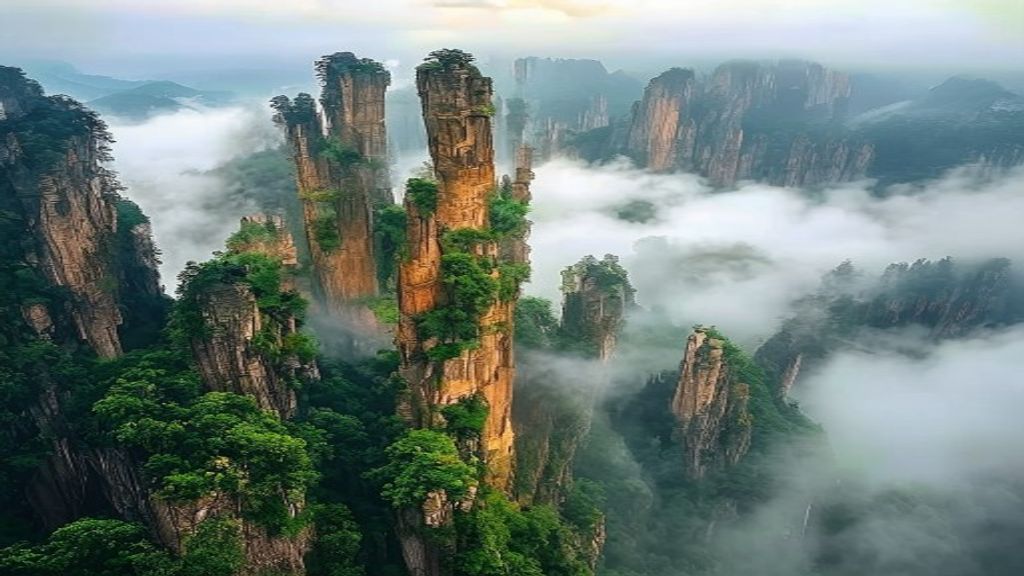
Rising like impossibly tall stone pillars from a sea of cloud and mist, the sandstone peaks of Zhangjiajie in China's Hunan Province inspired the floating mountains of Pandora — and in real life, they're even more breathtaking.
Zhangjiajie Unveiled: Inside China’s Avatar Mountains
When James Cameron’s creative team was scouting visual inspiration for the alien world of Pandora in Avatar, they found it in Hunan Province, China. The towering quartz-sandstone pillars of Zhangjiajie National Forest Park — some soaring over 200 meters into mist-draped skies — are so otherworldly they barely seem to belong to this planet. But they do. And you can walk among them.
China’s first-ever national forest park, established in 1982, Zhangjiajie remains one of Asia’s most spectacular and underrated natural destinations. While it draws millions of domestic Chinese visitors, international tourism is still surprisingly modest — meaning it’s possible, with the right timing, to experience something genuinely awe-inspiring with a sense of solitude.
What Makes Zhangjiajie So Special
The geology here is ancient and unique. Over 300 million years of erosion, seismic activity, and water have sculpted more than 3,000 sandstone columns from what was once a vast plateau. The tallest — Southern Sky Column, renamed “Avatar Hallelujah Mountain” after the film — reaches 1,080 meters. Clouds regularly drift between the pillars, creating an atmosphere of complete unreality.
Beyond the pillars, the park encompasses deep ravines, primary forest, crystal-clear streams, and diverse wildlife including clouded leopards and Chinese giant salamanders. It’s a full sensory experience — the smell of forest after rain, the sound of cicadas in summer, and the complete visual overload of a landscape that seems computer-generated.
Must-See Spots
- Tianzi Mountain — The highest peak in the park and arguably the best viewpoint for watching cloud inversions swallow and reveal the stone pillars in waves. Dawn visits are transcendent.
- Yuanjiajie (Avatar Hallelujah Mountain) — The area most associated with the film, with suspension bridges between pillars and jaw-dropping canyon overlooks. Take the Bailong Elevator — the world’s tallest outdoor elevator, cut into a cliff face — for an entrance worthy of the landscape.
- The Glass Bridge (Zhangjiajie Grand Canyon) — A short drive from the main park, this 430-meter, see-through suspension bridge spans a dramatic gorge. Terrifying and exhilarating in equal measure.
- Tianmen Mountain — Accessible via the world’s longest cable car (7.5km), culminating in a natural rock arch called Heaven’s Gate — a 131-meter-high hole through the mountain.
- Golden Whip Stream — A leisurely 7.5km riverside trail through the forest floor, between towering pillars reflected in glassy water. The most peaceful way to experience the park.
Best Time to Visit
April–May and October–November are the sweet spots. Spring brings lush green growth and wildflowers; autumn turns the forest gold and rust. Cloud inversions — where mist fills the valleys between pillars — are most frequent in December through March, creating the most cinematic conditions for photography. Summer (June–August) is busiest and hottest. Avoid Chinese Golden Week holidays (early October, late January) for smaller crowds.
Practical Tips
- Getting there: Fly into Zhangjiajie Hehua International Airport (DYG), with connections from Beijing, Shanghai, Chengdu, and Guangzhou. The park is about 30 minutes from the airport by taxi.
- Base yourself in Wulingyuan — The small town adjacent to the park entrance has a wide range of hotels from budget guesthouses to comfortable mid-range options. Book well ahead in peak season.
- Park pass: A combined multi-day ticket covers all major areas. Given the park’s size, plan at least 3 full days to explore properly without rushing.
- Crowds: Enter the park before 8am to beat the tour groups. The Tianzi Mountain area is consistently less crowded than Yuanjiajie.
- Language: English signage in the park is decent, but outside of it, translation apps (Google Translate or Baidu) are essential.
- Altitude & fitness: The park involves significant uphill walking and stair climbing. Comfortable shoes with grip are non-negotiable. Most key viewpoints have cable car alternatives for those who prefer.
Zhangjiajie is one of those rare places where photographs — no matter how stunning — genuinely fail to prepare you for the reality. Standing at the edge of Tianzi Mountain as clouds pour through stone pillars like slow-motion waterfalls, you’ll understand why filmmakers looked at this landscape and saw another world entirely.