Tbilisi After Dark: Georgia's Ancient City Where Time Bends
Perched at the crossroads of Europe and Asia, Tbilisi is a city of sulfurous bathhouses, medieval fortresses, and one of the world's most exciting food and wine scenes — all for a fraction of what you'd pay anywhere else. Few capitals on earth reward the curious traveler so generously.
Tbilisi After Dark: Georgia’s Ancient City Where Time Bends
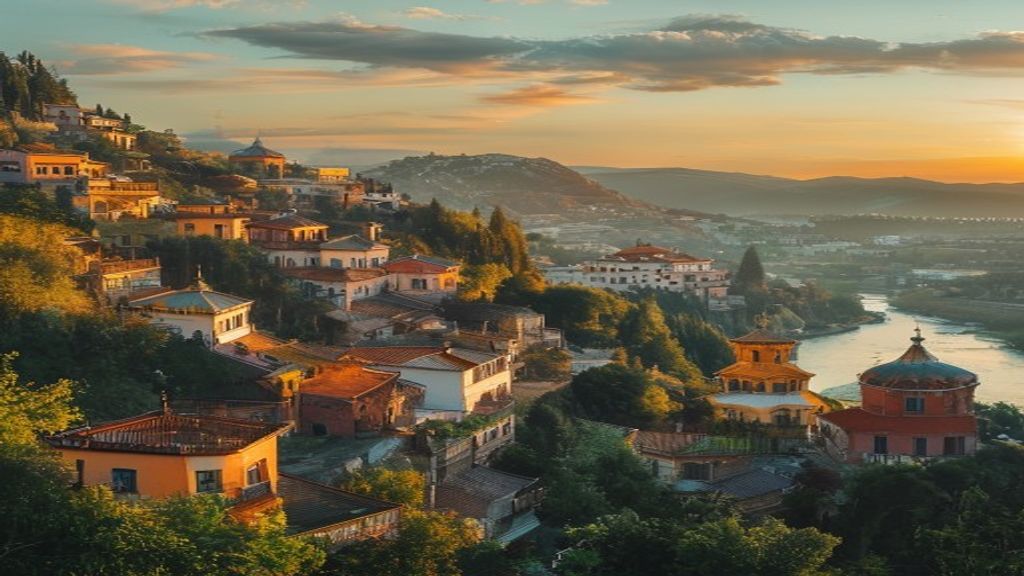
Tbilisi doesn’t reveal itself immediately. Arrive by night and what greets you first is a tangle of ornate wooden balconies jutting over narrow cobblestone lanes, the glow of candlelit wine bars, and the faint mineral tang of sulfur drifting up from the bathhouses below the old town. By morning, a 4th-century fortress watches over it all from a hilltop, as it has for 1,600 years.
The capital of the Republic of Georgia — the country, not the U.S. state — is one of the most underrated city destinations on earth. In 2025 and 2026 it has begun appearing on more travel radars, but it still carries the electric feeling of somewhere genuinely undiscovered.
What Makes Tbilisi Extraordinary
Tbilisi is ancient — founded in the 5th century AD — yet it pulses with modern creative energy. The Old Town (Kala) is a UNESCO-listed maze of Persian-influenced architecture, Orthodox churches, and pastel-colored houses with intricate wooden juliet balconies that seem to defy gravity. The Narikala Fortress, floodlit at night, towers over the Mtkvari River and has witnessed invasions by Persians, Mongols, and Russians across the centuries.
Georgia is also the birthplace of wine — with over 8,000 years of winemaking history — and Tbilisi is the best place on earth to explore it. Amber-hued qvevri wines (made in clay pots buried underground) are unlike anything produced in the New or Old World. The natural wine bar scene here rivals Paris and New York at a quarter of the price.
Best Time to Visit
April–June and September–November are the golden windows. Spring brings cherry blossoms to the city parks and mild temperatures perfect for walking. Autumn sees the vineyards turn amber and the famous Rtveli (grape harvest) fill the Kakheti wine region just an hour away. July and August are hot and busy; winter is cold but atmospheric, with significantly cheaper prices.
Must-See Spots
- Abanotubani (Sulfur Bath District) — Soak in a private domed bathhouse fed by natural sulfurous hot springs. Reportedly visited by Alexandre Dumas, who called it the finest bath of his life.
- Narikala Fortress & Botanical Garden — Take the cable car up from Rike Park for sunset views over the terracotta rooftops.
- Sharden Street — The cobblestone heart of Tbilisi’s nightlife: wine bars, galleries, and restaurants spilling onto the pavement.
- National Museum of Georgia — Home to a staggering collection of Gold jewelry from the 3rd millennium BC.
- Mtatsminda Pantheon — A hilltop cemetery where Georgia’s greatest writers, artists, and heroes are buried amid mountain views.
- Dezerter Bazaar — The city’s sprawling, chaotic, utterly wonderful food market.
Practical Tips
- Getting there: Tbilisi International Airport is served by Turkish Airlines, Wizz Air, FlyDubai, and others. Visa-free entry for citizens of the EU, US, UK, and many other countries — for up to 365 days.
- Getting around: The metro is cheap and clean; taxis via the Bolt app cost €2–4 for most city rides.
- Currency: The Georgian Lari (GEL). Budget travelers can live extremely well on €40–50/day including accommodation.
- Food: Don’t leave without eating khinkali (soup dumplings), khachapuri (cheese bread), and mtsvadi (grilled meat skewers). Most restaurants are outstanding and inexpensive.
- Day trips: The cave city of Uplistsikhe, the monastery of Mtskheta, and the wine valleys of Kakheti are all within 1–2 hours.