Tbilisi After Dark: Georgia's Unmissable Capital
Straddling the crossroads of Europe and Asia, Tbilisi is a city of crumbling medieval towers, sulfurous bathhouses, and one of the most vibrant emerging food-and-wine scenes on the planet. It's the city that rewards curious travelers willing to look just beyond the map's edge.
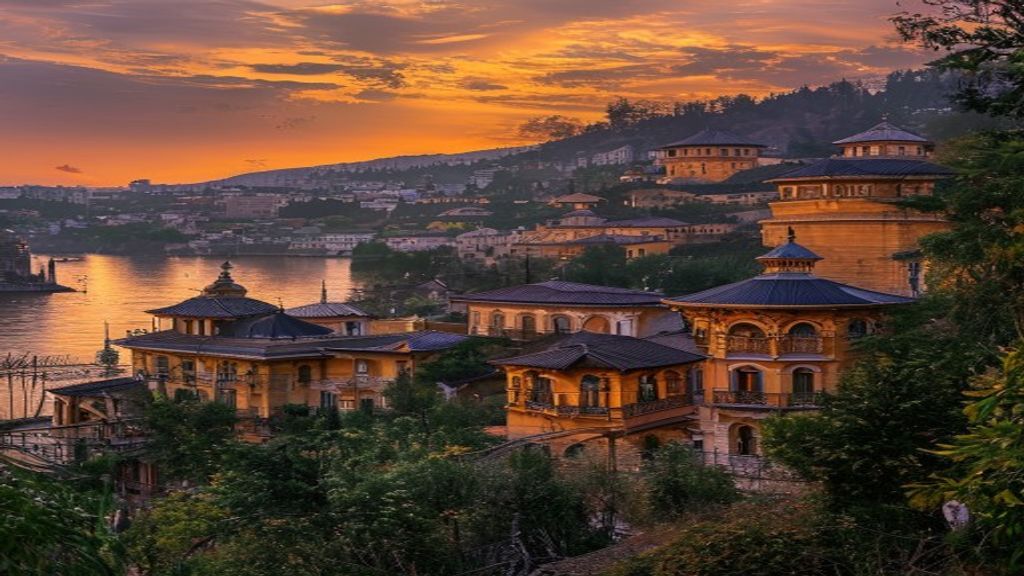
Tbilisi After Dark: Georgia’s Unmissable Capital
For years, Tbilisi flew under the radar while travelers flocked to Prague, Lisbon, and Budapest. That quiet era is ending. Georgia’s ancient capital — a city of 1.5 million souls draped across the gorge of the Mtkvari River — has quietly become one of the most talked-about cities in the world among discerning travelers. And yet, it still feels gloriously, authentically itself.
What Makes Tbilisi Special
Tbilisi’s magic lies in its contradictions. Byzantine churches stand in the shadow of Soviet-era apartment blocks. Baroque balconies carved from walnut wood overhang cobblestone lanes. A futuristic steel-and-glass concert hall by architect Massimiliano Fuksas erupts from the riverbank like a crashed spaceship from the future. The city is simultaneously ancient and avant-garde — and it wears this identity with total confidence.
Georgia is also widely considered the birthplace of wine, with an 8,000-year tradition of fermenting grapes in clay vessels called qvevri buried underground. The natural wine movement has its spiritual home here, and Tbilisi’s old-town wine bars serve amber-hued, skin-contact Rkatsiteli and spicy Saperavi that you simply won’t find anywhere else. Pair them with khinkali (twisted soup dumplings) and khachapuri (cheese-filled bread boats), and a single dinner becomes a cultural education.
Best Time to Visit
Spring (April–June) and autumn (September–November) are ideal — warm, dry, and spectacular as the surrounding Caucasus mountains either bloom or turn gold. Summer can be intensely hot in the city itself, though it’s prime season for the nearby Greater Caucasus mountain villages like Kazbegi. Winter travel is increasingly popular for those seeking the dramatic backdrop of snow-capped peaks above the old city’s rooftops.
Must-See Spots
- Narikala Fortress — A 4th-century citadel perched above the old city, best reached via the cable car from Rike Park; views at dusk are extraordinary.
- Abanotubani (Sulfur Bath District) — Domed brick bathhouses fed by natural hot springs; book a private bath and kisi (traditional scrub) for a deeply restorative experience.
- Shardeni Street — The lively artery of the old town, lined with wine bars, artisan shops, and shaded terraces perfect for long evenings.
- Mtatsminda Park & Pantheon — A hilltop funicular ride leads to Georgia’s literary pantheon cemetery and sweeping city panoramas.
- Fabrika — A former Soviet sewing factory transformed into a creative hub of bars, hostels, studios, and street food vendors that defines Tbilisi’s new creative energy.
Practical Tips
- Getting there: Tbilisi International Airport (TBS) has growing direct connections from across Europe, the Middle East, and Central Asia. From Western Europe, expect a 3–4 hour flight.
- Visa: Citizens of over 90 countries (including the EU, US, UK, and Canada) can enter Georgia visa-free for up to 365 days — one of the world’s most generous visa policies.
- Currency: Georgian Lari (GEL). Tbilisi is excellent value; a full dinner with wine rarely exceeds €15–20 per person.
- Getting around: The metro is cheap and efficient; Bolt (ride-hailing) is widely available and inexpensive for longer trips.
- Language: Georgian uses its own unique script (Mkhedruli) — learning a few words like madloba (thank you) earns immediate warmth from locals.
Tbilisi doesn’t simply offer sights to tick off a list — it offers a feeling. An intoxicating sense that you’ve arrived somewhere real, layered, and alive. Go before the rest of the world catches up.