Tbilisi After Dark: Georgia's Most Electrifying City
Straddling the line between Europe and Asia, Tbilisi is a city of crumbling pastel balconies, ancient bathhouses, boundary-pushing contemporary art, and a nightlife scene that has taken the world by storm. Georgia's capital is one of the most dynamic and underrated destinations of the 2020s.
Tbilisi After Dark: Georgia’s Most Electrifying City
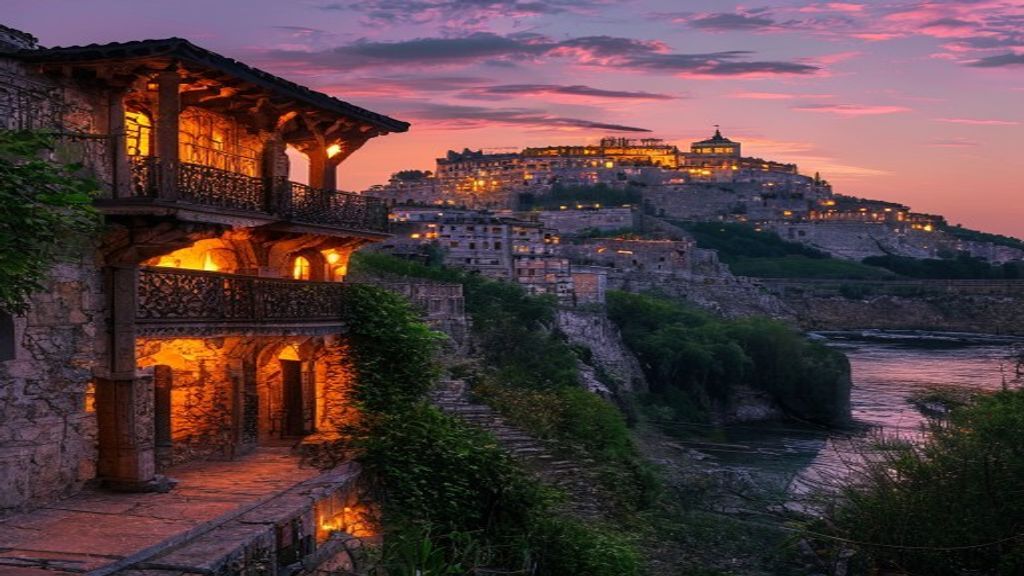
Some cities charm you slowly. Tbilisi hits immediately. The moment you cross the Mtkvari River into the old town of Kala, with its gravity-defying wooden balconies draped over narrow cobblestone lanes and the ruins of Narikala Fortress looming above in warm amber light, you understand that this place operates by its own beautiful logic. Georgia’s capital has been a crossroads of civilizations for over 1,500 years, and every era has left its fingerprints — Byzantine churches, Persian-era bathhouses, Soviet modernist boulevards, and a thriving contemporary design scene all coexist in improbable, gorgeous harmony.
What Makes Tbilisi Special
Tbilisi defies easy categorization. The Abanotubani sulfur bath district, where domed brick structures vent steam into the sky above the river gorge, has been a place of communal bathing since the 5th century. According to legend, it was the discovery of these natural hot springs by King Vakhtang I Gorgasali that inspired the founding of the city itself. Today you can book a private sulfur bath room for as little as $10 — an utterly unique experience.
The city’s architecture is itself a spectacle: ornate wooden oriel balconies jut out over alleyways like the balconies of a thousand theatrical stages. Many are beautifully preserved; others tilt at angles that suggest they’re held up by sheer optimism. Together they form the soul of old Tbilisi.
For contemporary culture, the Fabrika complex — a repurposed Soviet sewing factory — houses independent coffee shops, galleries, fashion studios, and a courtyard buzzing with creative energy. And then there’s the nightlife: Tbilisi’s techno clubs, particularly Bassiani (housed in the vaults beneath a sports stadium), have earned international acclaim as some of the best in the world.
Best Time to Visit
April–June and September–November are the sweet spots — mild temperatures, fewer tourists, and the city draped in either spring blossoms or autumn gold. Summer (July–August) is hot and busy; winter is cold but atmospheric and budget-friendly.
Must-See Spots
- Narikala Fortress & Botanical Garden — hike or take the cable car up for sweeping views over the old city
- Shida Kartli Countryside Day Trip — rolling vine-covered hills only 90 minutes from the capital
- National Museum of Georgia — home to extraordinary golden artifacts from ancient Colchis
- Rustaveli Avenue — the grand 19th-century boulevard lined with theatres, galleries, and grand cafés
- Dezerter Bazaar — a chaotic, fragrant central market where locals shop for spices, churchkhela, and fresh produce
Practical Tips
- Getting there: Tbilisi International Airport is well connected to European hubs via Georgian Airways, Wizz Air, and Turkish Airlines. A taxi from the airport to the city center costs around $10–15.
- Currency: The Georgian Lari (GEL) is the local currency. ATMs are widely available and rates are favorable for most Western visitors.
- Food: Georgian cuisine is one of the world’s great undiscovered culinary traditions. Don’t leave without eating khinkali (soup dumplings), khachapuri adjaruli (cheese-filled bread boat with an egg), and drinking natural orange wine from the Kakheti region.
- Safety: Tbilisi is generally very safe for travelers. Georgians are famously hospitable — the concept of Tamada (a toastmaster at a feast) reflects a culture that treats guests as sacred.
- Language: Georgian script (Mkhedruli) is entirely unique and beautiful. Learning a few words — madloba (thank you), gamarjoba (hello) — will earn you enormous warmth.
Tbilisi is the rare city that rewards both the history lover and the hedonist, the architecture enthusiast and the adventurous eater. Visit in 2026 before it becomes the next Prague.