Tbilisi After Dark: Georgia's Capital Will Steal Your Soul
Straddling the crossroads of Europe and Asia, Tbilisi is an ancient city of sulfurous bathhouses, crumbling baroque balconies, and a food and wine scene rooted in 8,000 years of history. Wildly underrated and utterly addictive, Georgia's capital is the kind of place travelers whisper about like a prized secret.
Tbilisi After Dark: Georgia’s Capital Will Steal Your Soul
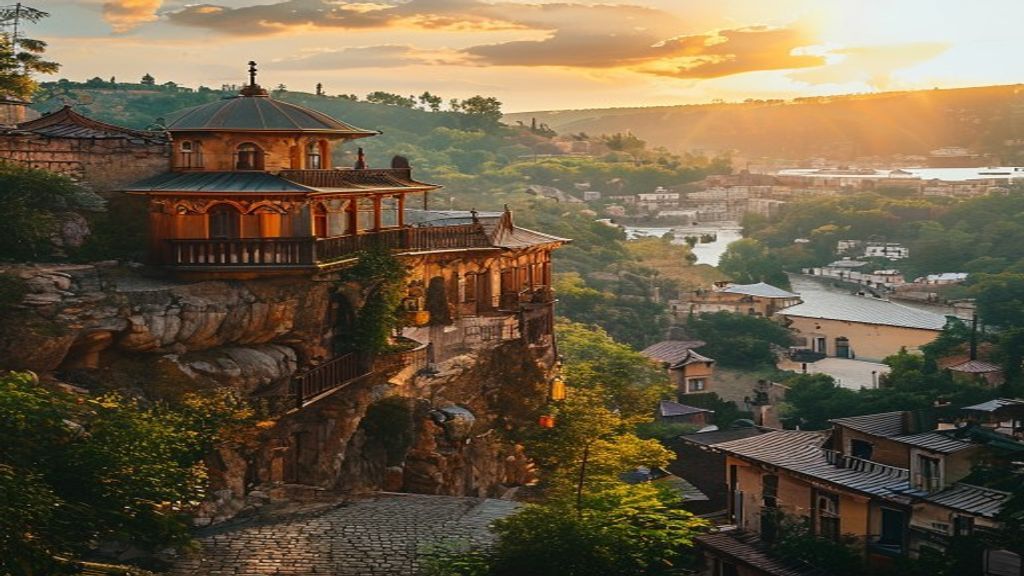
There are cities that impress you and cities that haunt you. Tbilisi, the capital of the Republic of Georgia, is firmly in the second category. Draped across the banks of the Mtkvari River and watched over by the ancient Narikala Fortress, this city of 1.2 million people carries the weight of millennia in every cobblestone and carved wooden balcony.
What Makes Tbilisi Special
Tbilisi is a city of beautiful contradictions. Soviet-era apartment blocks loom beside centuries-old Orthodox churches. Natural sulfur baths — the city’s namesake, tbili meaning “warm” in Georgian — billow steam through the historic Abanotubani district. Crumbling Art Nouveau mansions painted in peeling golds and blues lean over narrow lanes in Fabrika, a converted Soviet sewing factory turned bohemian creative hub.
But perhaps the greatest reason to visit Georgia is what goes on the table. Georgian cuisine is one of the world’s most underappreciated culinary traditions — think khinkali (pleated soup dumplings), khachapuri (cheese-stuffed bread, preferably the Adjarian boat-shaped variety with a raw egg on top), and slow-braised walnuts and herbs in combinations that feel both ancient and revelatory. Washed down with qvevri wine — amber-hued, skin-contact wines fermented in clay vessels buried underground — dinner in Tbilisi is an experience that demands repetition.
Must-See Spots
- Narikala Fortress & Kartlis Deda — The ancient hilltop citadel offers sweeping panoramas of the city. Climb up on foot through the old town or take the cable car from Rike Park.
- Abanotubani Sulfur Baths — The domed brick bathhouses in this district have been in use since at least the 5th century. Book a private room for a soaking session in naturally heated mineral water.
- Shota Rustaveli Avenue — The grand cultural boulevard lined with neoclassical theatres, galleries, and the iconic glass-and-steel Bridge of Peace spanning the river.
- Mtatsminda Park & Funicular — Ride the historic funicular to the hilltop park for the best city views and a meal at the mountaintop restaurant.
- Marjanishvili & Fabrika District — Tbilisi’s hipster heartland, packed with natural wine bars, record shops, indie restaurants, and some of the best street art in the Caucasus.
- Georgian National Museum — Home to extraordinary treasures including ancient gold jewelry and the world’s finest collection of Colchian artifacts.
Best Time to Visit
April–June and September–November are the ideal windows. Spring brings blooming wisteria and mild temperatures perfect for exploring the old town on foot. Autumn is arguably even better — the surrounding Caucasus mountains are draped in amber foliage, harvest festivals fill the city with music and wine, and the light turns the honey-colored city into something from a painting. Summers can be hot and humid; winters are cold but atmospheric, with snow occasionally dusting the fortress.
Practical Tips
- Getting there: Tbilisi International Airport (TBS) is well-connected via Turkish Airlines (through Istanbul), Wizz Air, and Georgian Airways.
- Visa: Citizens of over 95 countries can enter Georgia visa-free for up to 365 days — one of the world’s most generous visa policies.
- Currency: Georgian Lari (GEL). ATMs are plentiful; cash is preferred in markets and small eateries.
- Getting around: Tbilisi’s metro is cheap and clean. Bolt (the European Uber equivalent) is reliable and extremely affordable.
- Budget: Georgia is remarkably affordable. Expect to pay €5–10 for a generous restaurant meal and €1–2 for a glass of excellent local wine.
- Hidden tip: Don’t skip a day trip to the cave city of Uplistsikhe or the hilltop town of Mtskheta — Georgia’s ancient spiritual capital, just 20 minutes from Tbilisi and a UNESCO World Heritage Site.