Socotra: Yemen's Alien Island at the Edge of the World
With its dragon blood trees, fluorescent-turquoise lagoons, and white sand dunes tumbling into the Arabian Sea, Socotra looks like it was designed on another planet — and its extraordinary isolation means it almost was.
Socotra: Yemen’s Alien Island at the Edge of the World
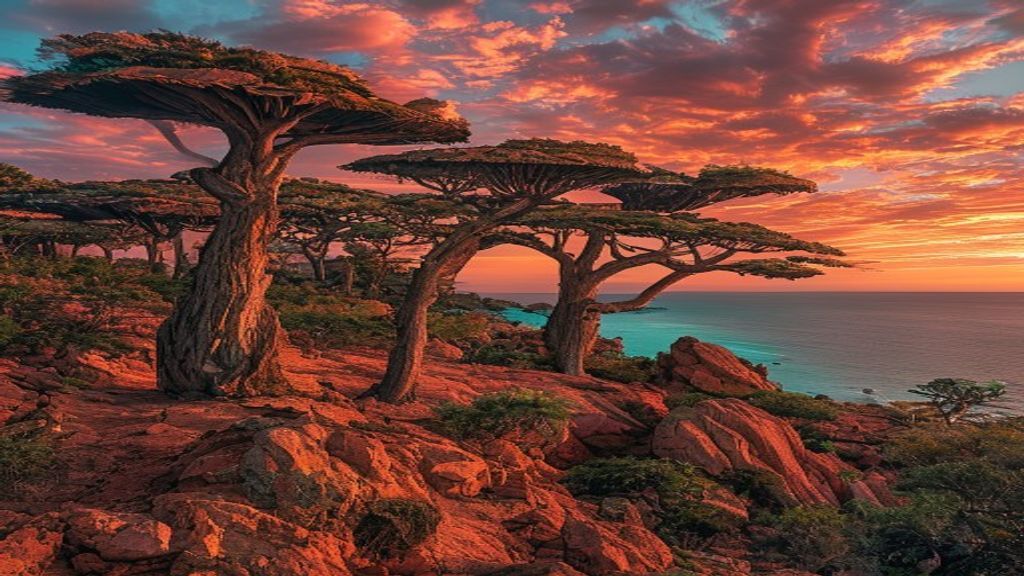
If you set out to design an island unlike anywhere else on Earth, you might come up with something like Socotra. Located in the Arabian Sea off the Horn of Africa — technically part of Yemen but geographically closer to Somalia — this UNESCO World Heritage archipelago has been so isolated for so long that roughly one-third of its plant species exist nowhere else on the planet. The result is a landscape that stops people in their tracks: the sky is full of umbrella-shaped trees that bleed red sap, the beaches are flanked by white dunes straight out of a desert fantasy, and the water is an implausible shade of turquoise.
What Makes Socotra Extraordinary
Socotra was separated from the African mainland approximately six million years ago, and that isolation created a living laboratory of evolution. The island’s most iconic resident is the Dragon Blood Tree (Dracaena cinnabari) — a Dr. Seuss-like tree with an inverted umbrella canopy of waxy leaves and a trunk that oozes crimson sap, used medicinally and as a dye for millennia. The island also hosts the Bottle Tree, the Desert Rose, and hundreds of endemic plants found in no other corner of the world.
Beyond its alien botany, Socotra’s coastline is staggering. Beaches like Shoab and Detwah Lagoon (accessible only by boat) offer crystalline waters and near-total solitude. The interior mountains — the Haghier range — rise to over 1,500 metres, and the Dixam Plateau is the best place to see dense dragon blood forest against a backdrop of canyon scenery.
Must-See Spots
- Dixam Plateau – The heart of the dragon blood tree forest; otherworldly at any time of day, magical at golden hour when the canopies glow against a crimson sky.
- Detwah Lagoon – A protected, flamingo-visited lagoon near the village of Qalansiyah, framed by white dunes and turquoise water.
- Homhil Protected Area – A highland plateau with endemic frankincense trees, panoramic views, and resident Egyptian vultures.
- Shoab Beach – One of the most remote and pristine beaches in the Arabian Peninsula, accessible only by boat from Qalansiyah.
- Hadibo Market – The island’s modest capital, where locals sell frankincense, dragon blood resin, and hand-woven goods.
Best Time to Visit
October through April is the prime window. Socotra is lashed by monsoon winds from June to September (the khareef), making the island effectively unreachable and most outdoor activities impossible. November to February offers the most stable weather, gentle breezes, and ideal conditions for camping and trekking.
Practical Tips
- Getting there: Flights operate from Abu Dhabi and Cairo to Socotra Airport (SCT) in Hadibo. Connections are infrequent — typically two to three per week — so build in flexibility.
- Visas & logistics: Entry is currently via special tourism arrangements coordinated through licensed tour operators, which is strongly recommended. Independent travel is extremely difficult.
- Accommodation: Mostly eco-camps and basic guesthouses. Camping under the stars beside dragon blood trees is an experience in itself.
- Currency: Yemeni Rial (YER); bring small USD notes as a practical backup.
- Responsible travel: Socotra’s ecosystem is fragile. Stay on marked trails, never break branches or remove plants, and use operators committed to low-impact tourism.
- Cultural note: Socotra is conservative. Dress modestly, and be respectful around local Socotri communities, who maintain a distinct language and culture separate from mainland Yemen.
Socotra is not an easy destination — and that is precisely the point. For those willing to navigate the logistics, it offers something almost impossible to find in the modern world: a landscape so strange and so intact that it feels like discovering an island that time, and evolution, forgot to share with the rest of us.