Socotra: The Alien Island at the Edge of the World
Socotra, a remote Yemeni archipelago in the Arabian Sea, looks like a planet that evolution forgot to share with the rest of Earth — home to the iconic Dragon's Blood Tree and hundreds of plant species found nowhere else on the planet. For the adventurous traveller willing to go truly off the beaten path, it is the most surreal and humbling landscape on Earth.
Socotra: The Alien Island at the Edge of the World
There is no other place on Earth quite like Socotra. Isolated in the Arabian Sea for millions of years, this small archipelago — technically part of Yemen but geographically closer to the Horn of Africa — evolved in total isolation, producing a concentration of endemic species that scientists have compared to the Galápagos. Roughly 37% of Socotra’s plant species, 90% of its reptile species, and 95% of its land snail species exist nowhere else on the planet. When you step ashore, you feel, with absolute sincerity, that you have left Earth entirely.
What Makes Socotra Special
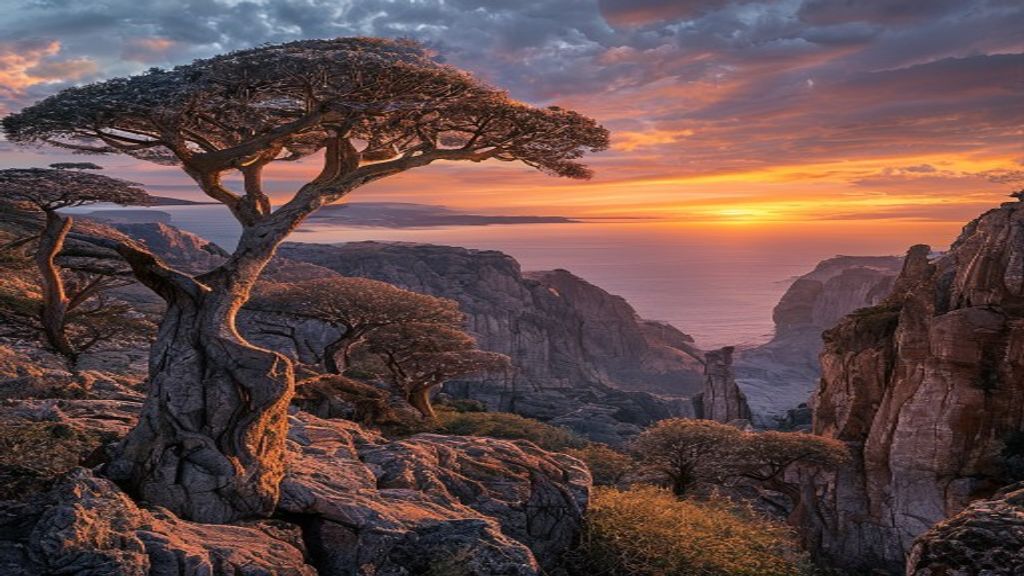
The undisputed symbol of Socotra is the Dragon’s Blood Tree (Dracaena cinnabari) — an umbrella-shaped tree with a dense, flat canopy of silver-green leaves that looks like something an illustrator invented for science fiction. Its red sap, once prized across the ancient world as a dye and medicine, gives it its extraordinary name. These trees grow on rocky plateaus in the island’s interior, and seeing a forest of them standing against a stark blue sky is one of travel’s genuinely life-altering experiences.
Beyond the Dragon’s Blood Tree, Socotra is home to the swollen-trunked Desert Rose (Adenium obesum socotranum), eerie cucumber trees, vast sand dunes that tumble into turquoise lagoons, and beaches so white and clean they barely seem real. The island’s isolation has protected it from overdevelopment; as of 2026, it receives only a few thousand tourists per year.
Best Time to Visit
The window for visiting Socotra is narrow and critical. The island is battered by the Indian Ocean monsoon from June through September, making it completely inaccessible — flights are suspended and seas too rough for boats. The ideal travel window is October through May, with November through April offering the most stable, pleasant conditions. Winds can still be strong on the eastern beaches in winter, which are beloved by kite surfers.
Must-See Spots
- Dixam Plateau: The heartland of the Dragon’s Blood Tree forest, where hundreds of ancient trees spread their alien canopies across a dramatic limestone landscape.
- Detwah Lagoon: A breathtaking turquoise lagoon near the town of Qalansiyah, enclosed by white sand dunes — one of the most beautiful coastal scenes on the planet.
- Homhil Protected Area: A high-altitude nature reserve with Dragon’s Blood Trees, endemic Socotri aloe, and panoramic views over the Arabian Sea.
- Aomak Beach: A seemingly endless stretch of white sand on the island’s southern coast, fringed by dunes and completely undeveloped.
- Hadibo Market: The island’s modest capital, where fishermen bring their catch each morning and local traders sell frankincense, dried fish, and traditional woven goods.
Practical Tips
- Getting there: Flights operate from Abu Dhabi and Cairo (via Air Arabia and other carriers) to Socotra’s small Hadibo Airport. Check schedules carefully — routes change seasonally.
- Visas: Entry is managed through approved tour operators; independent travel to Socotra is extremely difficult to arrange. Book through a licensed Socotri or Yemeni tour operator who handles all permits.
- Accommodation: Infrastructure is basic — expect simple guesthouses, eco-lodges, and a great deal of camping under the stars. Embrace it.
- Currency: Yemeni Rial (YER), though US dollars are widely accepted. Bring cash; there are no international ATMs.
- Health: Consult a travel medicine clinic well before departure. Recommended vaccinations include hepatitis A and B, typhoid, and tetanus. Bring comprehensive travel insurance.
- Responsible travel: Socotra is a UNESCO World Heritage Site. Stay on marked trails around fragile endemic vegetation, carry out all rubbish, and support local guides and guesthouses.
Socotra is not a destination you visit for comfort. You visit it for the profound, humbling reminder that this planet is stranger and more magnificent than any of us can fully imagine — and that some of its greatest wonders are still waiting quietly, far from the crowds, for those willing to seek them out.