Socotra Island: The Galápagos of the Indian Ocean
With its alien Dragon Blood Trees, powder-white dunes plunging into turquoise water, and 700 plant species found nowhere else on Earth, Yemen's Socotra Island looks less like our planet and more like a concept artist's dream — and it may be the last truly untouched wilderness in the Arabian world.
Socotra Island: The Galápagos of the Indian Ocean
If a landscape could be described as science fiction made real, it would be Socotra. Floating in the Arabian Sea roughly 240 kilometers off the Horn of Africa and belonging to Yemen, this remote island has spent millions of years in geographic isolation — long enough to evolve a flora so bizarre, so otherworldly, that botanists have compared visiting it to walking on another planet.
Socotra has been called the “Galápagos of the Indian Ocean,” and the label is apt. Approximately 37% of its plant species, 90% of its reptile species, and 95% of its land snail species are endemic — found nowhere else on Earth. UNESCO recognized this staggering biodiversity with a World Heritage designation in 2008. Yet despite all of this, Socotra remains largely unknown outside the world of dedicated naturalists and extreme adventurers.
What Makes Socotra Unlike Anywhere Else
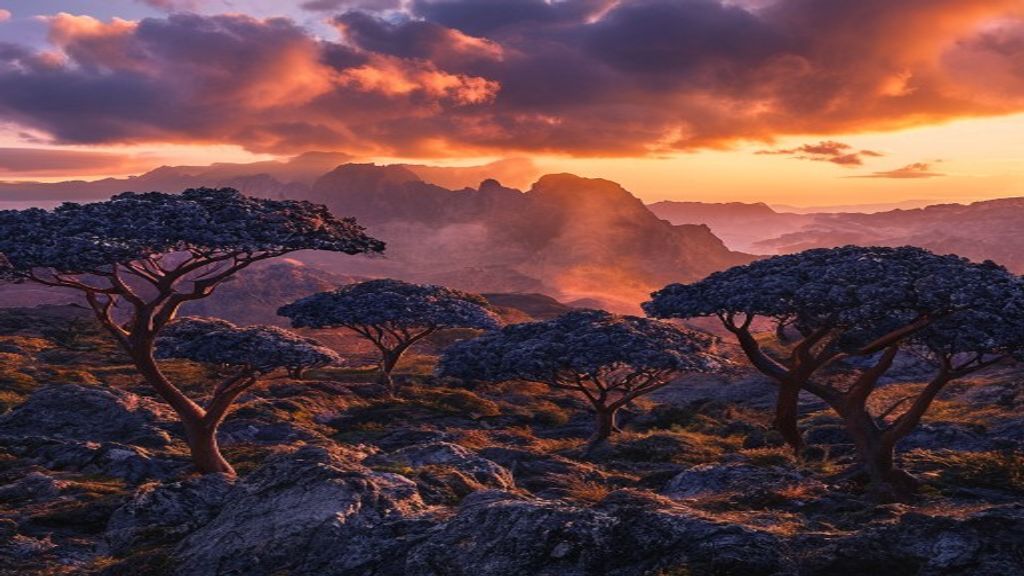
The island’s most iconic resident is the Dragon Blood Tree (Dracaena cinnabari) — an umbrella-shaped tree with a dense, flat canopy that looks like an inside-out mushroom or a floating green cloud. Named for the deep crimson resin that bleeds from its bark, these trees cover the Haggier Mountains in dense, fog-swept forests that seem lifted from a fantasy novel. They evolved their canopy shape to capture moisture from the island’s seasonal mists — evolution as elegant engineering.
Beyond the trees, Socotra has pristine coral reefs that rival the Maldives, desert dunes that drift right down to the shoreline, and cave systems containing ancient inscriptions by Indian, Ethiopian, and Greek sailors from over 2,000 years ago.
Must-See Spots
- Dixam Plateau: The epicenter of Dragon Blood Tree forests. Morning mist rolling through the canopy here is one of the most surreal sights in the natural world.
- Qalansiyah Lagoon: A sheltered turquoise lagoon backed by white sand dunes — often cited as one of the most beautiful beaches in the world, and almost entirely empty.
- Homhil Protected Area: A highland area combining Dragon Blood Trees, frankincense trees, and a natural infinity pool with views over the Arabian Sea.
- Detwah Lagoon: Near the western tip of the island, this UNESCO-protected lagoon is a critical habitat for flamingos, herons, and sea turtles.
- Hoq Cave: A vast limestone cave system in the northeast, containing ancient sailor inscriptions and extraordinary stalactite formations. One of the most historically rich sites in the Arabian world.
Best Time to Visit
The October to April window is the only realistic travel season. From June through September, the island is battered by Indian Ocean monsoon winds so fierce that the airport closes for months. October and November offer the most dramatic post-monsoon light and lush vegetation. December through February is the sweet spot — comfortable temperatures (25–30°C), calm seas, and the full wildlife spectacle in bloom.
Practical Tips
- Getting there: Flights operate from Abu Dhabi and Cairo to Socotra International Airport, typically via charter or limited scheduled services. Check current airline availability carefully — connections change seasonally.
- Visas & safety: Socotra is administered as part of Yemen, a country under an ongoing conflict advisory. The island itself has remained largely stable and is controlled by UAE-backed forces, but check your government’s latest travel advice before booking. Many travelers enter via Abu Dhabi on organized tours.
- Tours: Independent travel is extremely difficult. Book with a specialist eco-tour operator — local Socotri guides are essential, outstanding, and the money goes directly to island communities.
- Accommodation: Expect basic tented or simple guesthouse accommodation. Bring a good sleeping bag, sunscreen, and a sense of adventure. There are no resorts, no spas, no cocktail bars — and that’s entirely the point.
- Respect: Socotra’s ecosystem is fragile. Stay on marked paths, do not remove plants or rocks, and follow your guide’s instructions around protected areas at all times.
Socotra doesn’t offer luxury. It offers something rarer: the feeling of standing somewhere the modern world has not yet touched.