Patagonia's Edge: The Untamed Wonders of Torres del Paine
At the southernmost tip of South America, Torres del Paine National Park is a place where granite spires pierce the clouds, turquoise glacial rivers carve ancient valleys, and guanacos wander freely across wind-blasted plains. This is wilderness at its most uncompromising — and most magnificent.
Patagonia’s Edge: The Untamed Wonders of Torres del Paine
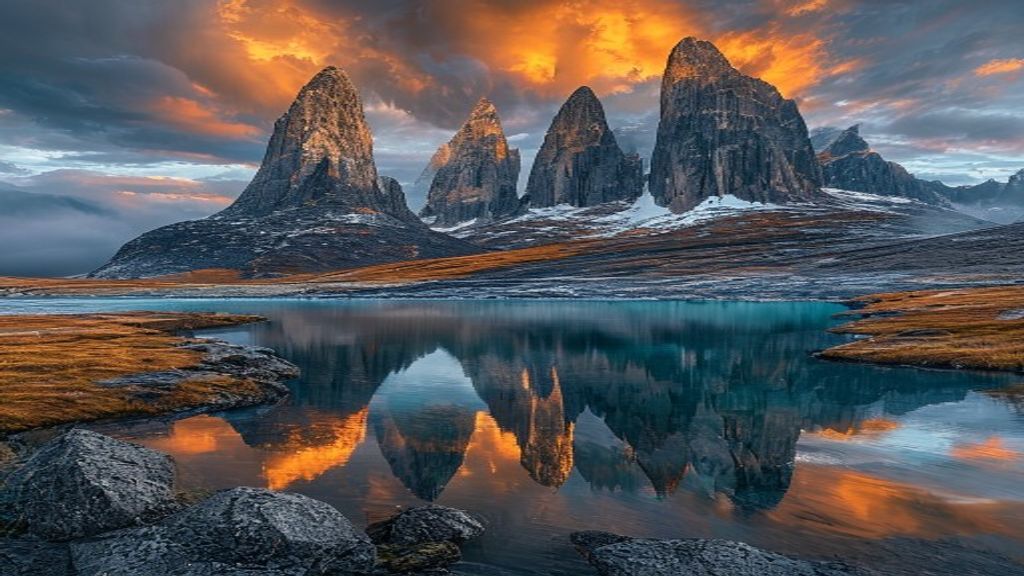
There are places on this planet that photographs simply cannot prepare you for. Torres del Paine National Park in Chilean Patagonia is one of them. The moment you round the final bend of the approach road and the three granite towers — Los Torres — materialize from behind the clouds, rising 2,800 meters from the plain like a cathedral of stone, something shifts inside you. You understand immediately why people return here again and again, changed each time by the landscape’s sheer, indifferent grandeur.
What Makes Torres del Paine Special
Established in 1959 and recognized as a UNESCO World Biosphere Reserve, Torres del Paine encompasses 242,000 hectares of steppe, forest, glaciers, and mountains that represent some of the most dramatic geography on Earth. The iconic three granite towers (the Torres) are the centrepiece, but the park’s spectacle extends far beyond them.
The Grey Glacier, a 6-kilometer wide river of ancient ice that calves electric-blue icebergs into Lago Grey, is one of the largest glaciers in the Southern Hemisphere outside Antarctica. The Cuernos del Paine — serrated horns of dark sedimentary rock capping paler granite — glow an impossible amber at sunrise. And the Valle del Francés, reached deep inside the W Trek route, is an amphitheatre of hanging glaciers and rockfall where the silence is broken only by the crack of ice and wind.
Wildlife here is spectacularly accessible. Guanacos (wild relatives of the llama) are everywhere, utterly unafraid. Andean condors ride thermals with 3-meter wingspans overhead. Lucky visitors spot pumas — Torres del Paine has one of the most densely observed wild puma populations anywhere — especially at dawn and dusk near the Lago Sarmiento area.
Best Time to Visit
October to April (Southern Hemisphere spring through early autumn) is the window for trekking. November–December and March–April are the sweet spots: fewer crowds than the January–February peak, more predictable weather windows, and longer daylight hours. Patagonian weather is famously volatile year-round — four seasons in a single day is not a cliché but a daily reality. Wind is the park’s defining atmospheric feature; gusts exceeding 120 km/h are recorded regularly.
Must-See Spots & Experiences
- The W Trek — A 5-day classic route connecting the three iconic viewpoints: Los Torres, Valle del Francés, and Glacier Grey. Refugios (mountain huts) and campsites must be booked months in advance.
- The O Circuit — For serious trekkers, the full 9-day loop around the Paine Massif adds the remote, less-visited Backside: a raw, unpeopled Patagonian wilderness.
- Mirador Las Torres at Sunrise — A 4–5 hour return hike from Refugio Las Torres; the pre-dawn start is brutal but the towers at first light reflecting in the glacial lagoon is unforgettable.
- Lago Pehoé by Catamaran — A ferry crossing that delivers arguably the park’s most cinematic view: the Cuernos rising directly from the lake’s turquoise surface.
- Kayaking Glacier Grey — Guided kayak tours weave between luminous blue icebergs within arm’s reach — one of the most visceral glacier experiences available anywhere.
Practical Tips
- Getting there: Fly to Punta Arenas (PUQ) or Puerto Natales; Puerto Natales is the gateway town with park buses and tour operators. The nearest international hub is Santiago (SCL), a 3-hour flight south.
- Booking: All treks and refugios inside the park require advance reservations through CONAF (the park authority) and Vertice/Las Torres concessionaires. Book 4–6 months ahead for peak season.
- Gear: Layers are non-negotiable. Windproof and waterproof outer layers, trekking poles, gaiters, and a high-quality sleeping bag rated to -5°C minimum are essential even in summer.
- Budget: Torres del Paine is not a cheap destination. Entry fees (~$35 USD in peak season), refugio packages ($100–200/night), and guide services add up. Budget travellers can camp and self-cater to reduce costs significantly.
- Leave No Trace: The park has suffered wildfires from careless camping in recent years. Follow all fire regulations strictly — open campfires are prohibited across most of the park.
Torres del Paine is not a comfortable destination — it is a demanding, wind-scoured, soul-expanding one. It asks something of you. And in return, it gives you landscapes that live in your memory for the rest of your life.