Patagonia's Torres del Paine: Where the World Feels Newly Made
At the southern tip of South America, Torres del Paine National Park erupts from the Patagonian steppe in a theatre of granite towers, electric-blue glaciers, and mirror-still lakes that will make you feel as though you've stepped onto a planet that hasn't finished forming yet. This is wilderness on a scale that redefines the word.
Patagonia’s Torres del Paine: Where the World Feels Newly Made
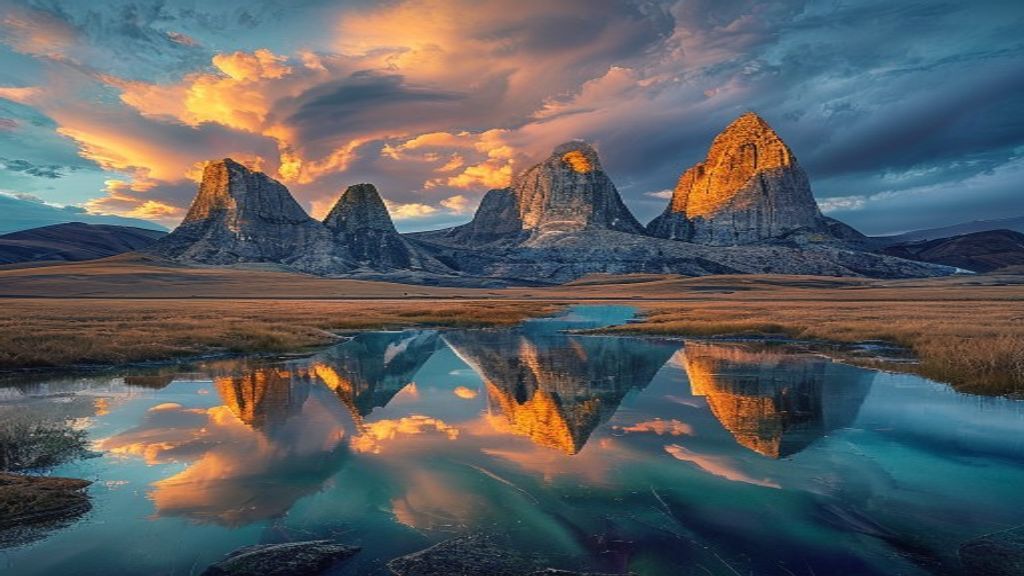
There are landscapes that impress, and then there are landscapes that undo you. Torres del Paine, in Chilean Patagonia, belongs firmly in the second category. The centerpiece of this UNESCO Biosphere Reserve — a cluster of three titanium-grey granite towers rising 2,850 metres sheer from the plateau — is so improbable, so geometrically savage, that staring at it for the first time feels like a trick of perception. Surely the earth cannot look like this. And yet here it is.
Spanning 242,000 hectares at the bottom of the world, Torres del Paine is a place of wild extremes: glaciers calving icebergs into milky turquoise lakes, Andean condors wheeling overhead on thermals, guanacos grazing against a backdrop of perpetually snow-capped peaks, and winds so fierce they can knock a grown adult sideways on an open ridge. It is, in every possible sense, elemental.
What Makes Torres del Paine Special
The park’s geology is the first revelation. The Paine Massif — the jagged crown of peaks that includes the Torres and the jagged Cuernos del Paine — formed when magma intruded into older sedimentary rock and was later sculpted by ice-age glaciers. The result is a landscape of almost surreal visual drama: black and gold banded peaks, bright blue glacial lakes (the color comes from suspended glacial flour), and rolling golden pampas dotted with Chilean flamingos.
The Grey Glacier is among the most accessible large glaciers in South America. You can hike to its face, kayak beside its iceberg-strewn lake, or take a boat across the water to reach the glittering blue ice walls themselves. The experience of standing before 6 kilometres of moving ancient ice is genuinely humbling.
Wildlife here is abundant and fearless. Pumas — rarely seen in most of South America — have become bold in the park, and dedicated wildlife-watching at dawn and dusk now gives visitors real odds of spotting them. Darwin’s rhea, Magellanic woodpeckers, and black-necked swans add to an extraordinary bird list.
Best Time to Visit
November through March is the Patagonian summer and the prime visiting window — days are long, temperatures are manageable (5–20°C), and the trails are fully open. October and April offer the best shoulder-season conditions: fewer crowds, gorgeous autumn or early-spring light, and lower accommodation prices. Winter (May–August) is cold, dark, and many facilities close, but the park never fully shuts, and snow-dusted peaks are dramatically beautiful for hardy adventurers.
Must-See Spots
- Mirador Las Torres — The classic pilgrimage: a 4–5 hour return hike from the refugio to the base of the three granite towers, best reached before dawn for the legendary pink sunrise reflected in the lagoon below.
- Valle del Francés — A stunning full-day loop through a valley hemmed by glaciers, hanging ice, and cascading waterfalls, with condors riding the thermals above.
- Grey Glacier Viewpoint & Kayak — Paddle among icebergs the color of blue glass on Lago Grey, with the glacier’s face rising 30 metres out of the water before you.
- Lago Pehoé — The park’s most photographed lake, its impossible turquoise surface perfectly reflecting the Cuernos del Paine — best seen from the road at sunset.
- Salto Grande Waterfall — An easy 30-minute walk from Refugio Paine Grande leads to this thundering cascade connecting Lago Nordenskjöld and Lago Pehoé.
Practical Tips
- Getting there: Fly to Punta Arenas (PUQ) or Puerto Natales. Puerto Natales is the park’s gateway town, 112 km north of the park entrance. Regular buses and private transfers run daily in season.
- Park entry fee: Approximately USD $35 (high season) for international visitors; fees are collected at the entrance gate.
- Accommodation: Book far in advance — 6–12 months for peak season. Options range from rustic shared refugios on the W Trek to the luxurious EcoCamp Patagonia domes. Wild camping is permitted in designated areas only.
- The W Trek vs. the O Circuit: The 5-day “W” hits all the major highlights and is suitable for moderately fit trekkers. The 8–10 day “O Circuit” loops the entire massif and is for experienced, well-equipped hikers.
- Weather: Notoriously unpredictable. Pack for four seasons in one day — waterproof layers, thermal base layers, and UV protection are all essential simultaneously.
- Leave No Trace: The park is fragile. Stay on marked trails, use designated camping spots, and pack out all waste. A 2011 wildfire (caused by a negligent camper) burned 17,000 hectares — the consequences of carelessness here are profound.