Patagonia's Edge: Torres del Paine and the End of the World
At the southern tip of South America, where the Andes dissolve into the windswept steppe and glaciers calve into milky turquoise lakes, Torres del Paine stands as one of the last truly wild places on Earth. This is a destination that recalibrates your sense of scale — and yourself.
Patagonia’s Edge: Torres del Paine and the End of the World
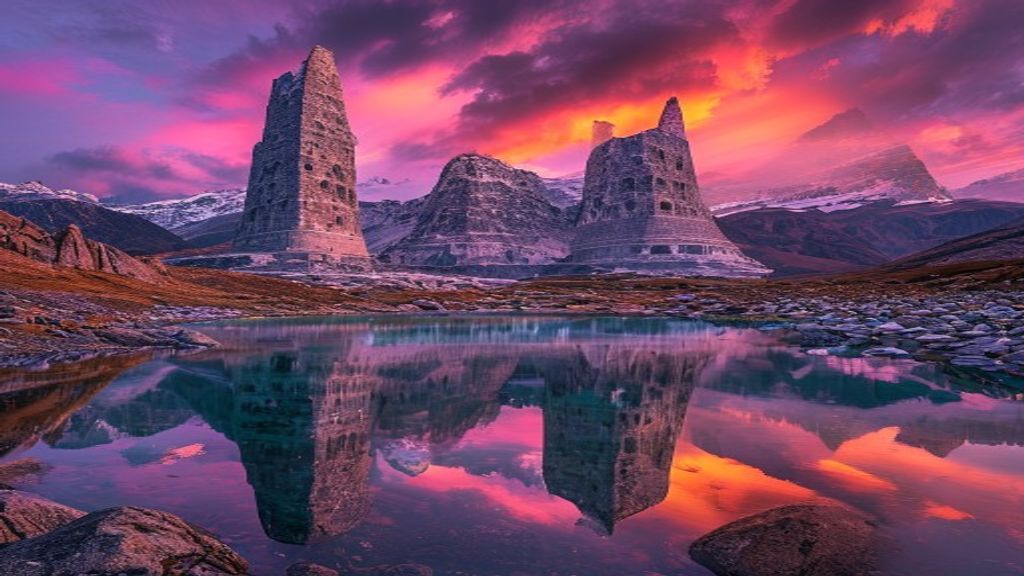
There are landscapes that are beautiful, and then there are landscapes that are impossible — places so visually extreme they register more as dream than reality. Torres del Paine National Park in Chilean Patagonia belongs firmly in the second category. Three granite towers, sculpted by millions of years of glacial erosion, soar nearly 2,800 meters above a steppe swept by winds so constant and fierce they have shaped every living thing that dares to grow here. The park’s centerpiece is violent, jagged, magnificent — and utterly addictive.
What Makes Torres del Paine Special
The park is a staggering concentration of superlatives. Grey Glacier, one of the largest outside the polar ice caps, calves enormous blue-tinted icebergs into the frigid waters of Lago Grey. The French Valley amphitheater — a cathedral of hanging glaciers, sheer black walls, and roaring waterfalls — is widely considered one of the world’s finest half-day hikes. The Cuernos del Paine (Horns of Paine), their distinctive dark sedimentary caps capping lighter granite bases, are geologically unlike almost anything else on the planet.
Wildlife here is strikingly unafraid of humans. Guanacos (wild relatives of the llama) graze within meters of the trails. Andean condors with three-meter wingspans ride thermals overhead. Pumas — one of Patagonia’s most thrilling secrets — are regularly spotted, particularly in the early morning near the park’s central valley. The park’s relative isolation means ecosystems are intact and teeming.
Best Time to Visit
Patagonia’s season is concentrated: October through April is when conditions are navigable, with the peak being December–February (Southern Hemisphere summer). This is also when the famous Patagonian wind is at its most intense — gusts of 120 km/h are not unusual. November and March offer a compelling balance: fewer hikers, still-accessible trails, and beautiful light without the full summer fury of the wind.
Must-See Spots
- Base Las Torres — the iconic 4–5 hour hike to the turquoise lake at the foot of the three towers; begin before dawn to catch sunrise
- Valle del Francés — a half-day circuit through the park’s dramatic interior amphitheater; bring a windproof jacket
- Mirador Condor — a lookout where Andean condors soar at eye level on the updrafts
- Lago Pehoé — a dazzling turquoise glacial lake with direct views of the Cuernos, perfect at golden hour
- Salto Grande Waterfall — where Lago Nordenskjöld’s waters thunder through a narrow basalt channel
Practical Tips
- Getting there: Fly into Punta Arenas or Puerto Natales (the closest town, 120 km from the park entrance) via Santiago. Bus services and shuttle transfers connect Puerto Natales to the park daily.
- Trekking routes: The W Trek (4–5 days) covers the park’s highlights; the O Circuit (8–10 days) circles the entire massif for an epic full experience. Book refugio and camping spots at least 6 months in advance — they sell out fast.
- Gear: Layers are non-negotiable. Wind, rain, sun, and snow can occur within the same hour. Trekking poles are invaluable on the rocky terrain.
- Permits & fees: A park entrance fee applies (approximately $35 USD for foreigners as of 2026). CONAF, Chile’s forestry authority, manages access and reserves closely.
- Leave no trace: Torres del Paine has suffered from fire damage in the past due to careless visitors. Fires are strictly prohibited outside designated areas. The park’s fragility is real — treat it accordingly.
- Altitude & fitness: The trek to Base Las Torres involves significant elevation gain on loose boulders. Allow time to acclimatize and be honest about your fitness level when planning routes.
Patagonia demands something of you — stamina, flexibility, and a willingness to be humbled. In return, it offers a connection to raw, untamed wilderness that very few places on Earth can still provide. Stand beneath the towers at sunrise, with the wind roaring and condors overhead, and you will understand completely.