Patagonia's Torres del Paine: Where the World Feels Newly Made
At the wind-scoured tip of South America, Torres del Paine erupts from the steppe in a cathedral of granite spires, electric-blue glaciers, and skies so vast they recalibrate your sense of what wild truly means.
Patagonia’s Torres del Paine: Where the World Feels Newly Made
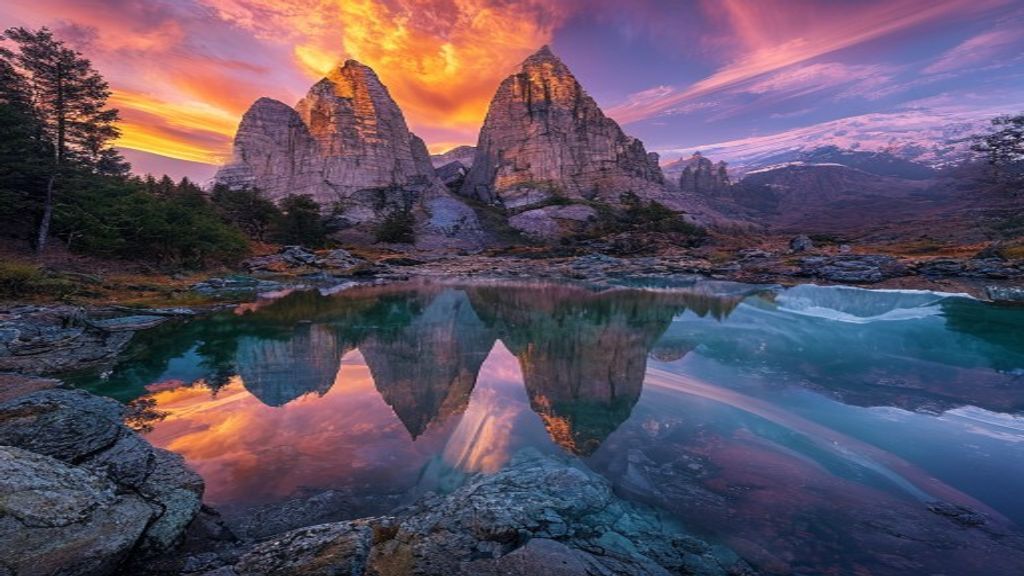
There are landscapes that humble you simply by existing. Torres del Paine National Park, in Chilean Patagonia near the southern end of the Americas, is one of them. Three colossal granite towers — ancient, sheer, and impossibly vertical — rise more than 2,800 meters above the surrounding steppe, commanding the horizon like the pillars of some forgotten civilization. Around them sprawls one of the most spectacularly diverse wilderness landscapes on Earth: glacial lakes in shades of turquoise and slate, rivers braided with glacial flour, wind-bent lenga beech forests blazing orange and red in autumn, and ice fields that calve thundering icebergs into frigid fjords.
What Makes Torres del Paine Special
Designated a UNESCO Biosphere Reserve, Torres del Paine encompasses over 242,000 hectares of virtually untouched wilderness. What sets it apart from other great national parks is the sheer variety compressed into a single landscape. In a single day, hikers can move from tundra-like steppe grazed by guanacos and rheas, through ancient forests alive with Andean condors, to the face of the Grey Glacier — a colossal river of ice that flows down from the Southern Patagonian Ice Field, the world’s third-largest reserve of fresh water.
The park’s crown jewel is the W Trek — a multi-day hiking route connecting the park’s most iconic viewpoints, including the Base of the Towers (where you watch the granite spires turn pink and then gold at sunrise), the French Valley (a glacially carved amphitheater of hanging glaciers and avalanching ice), and the shores of Lake Grey. For those seeking an even more immersive challenge, the O Circuit circumnavigates the entire Paine massif over 8–10 days through backcountry terrain rarely visited by anyone.
Wildlife here is abundant and remarkably unafraid. Guanacos — wild relatives of the llama — graze beside the trails in calm, curious herds. Pumas stalk the southern sector of the park, and patient, lucky visitors sometimes spot them hunting at dawn. Andean condors ride thermals above the towers with a wingspan reaching three meters.
Best Time to Visit
The Patagonian summer runs from November through March (remember: Southern Hemisphere seasons are reversed). This window offers the longest daylight hours, most stable weather, and access to all trails. October and April are shoulder season gems — fewer crowds, dramatic stormy light, and in April, the lenga beech forests turn spectacular shades of rust and gold. Be prepared for weather at any time of year: Patagonia is famous for its wind, and conditions can shift from sunshine to horizontal sleet within minutes.
Must-See Spots
- Mirador Las Torres (Base of the Towers) — The iconic viewpoint best experienced at sunrise, when alpenglow turns the granite pillars from rose to amber to gold over the aquamarine tarn below.
- Valle del Francés (French Valley) — A glacial valley ringed by hanging glaciers, where the sound of distant ice falls echoes constantly.
- Lago Grey & Grey Glacier — Walk the shore or take a boat tour to drift among electric-blue icebergs calved from the glacier’s ancient face.
- Mirador Condor — A high lookout where Andean condors soar at eye level on rising thermals.
- Salto Grande Waterfall — Where the Rio Paine squeezes through a narrow channel between Lago Nordenskjöld and Lago Pehoé in a roaring cascade — accessible even to day visitors.
Practical Tips
- Getting there: Fly into Punta Arenas or Puerto Natales (the closest town, 112 km from the park). Bus services run daily from Puerto Natales to the park entrance.
- Booking: Campsites and refugios (mountain huts) on the W Trek must be booked months in advance for the November–February peak season. Book through CONAF or authorized operators.
- Gear: Layering is essential. Pack waterproof and windproof outer layers, trekking poles, and sun protection (the Patagonian UV index is brutally high on clear days).
- Leave No Trace: The park nearly burned catastrophically in 2012 due to a careless campfire. Open fires are now strictly prohibited; camp stoves only.
- Photography: The light changes constantly and dramatically in Patagonia — pack a wide-angle lens and keep your camera accessible at all times. The hour before and after sunrise is transformative.
Torres del Paine does not meet you halfway. It demands effort, resilience, and a willingness to be genuinely uncomfortable. In return, it offers something increasingly rare in this century: the profound, disorienting, joyful feeling of being somewhere that dwarfs you completely.