The Okavango Delta: Africa's Jewel in the Kalahari
Every year, millions of gallons of water flow inland from Angola and spread across the sands of Botswana's Kalahari Desert, creating one of the most remarkable and biodiverse ecosystems on Earth — a place where elephants swim between islands and lions hunt in floodplains beneath skies so vast they seem infinite. The Okavango Delta is not merely a wildlife destination; it is one of the last truly wild places on the planet.
The Okavango Delta: Africa’s Jewel in the Kalahari
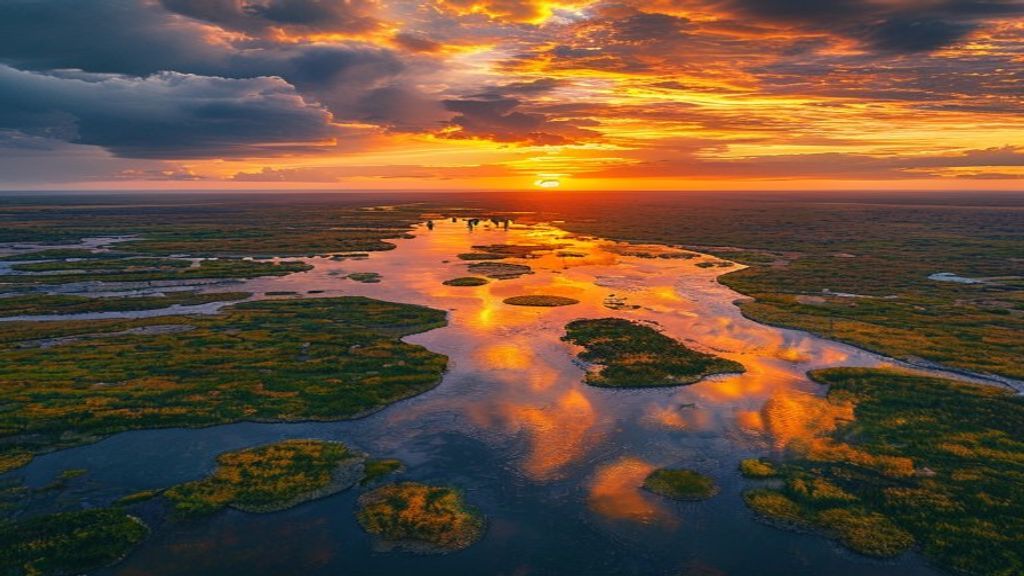
Most rivers flow toward the sea. The Okavango River does not. Rising in the highlands of Angola, it travels southeast for nearly 1,000 kilometers and then, instead of reaching the ocean, fans out across the flat sands of Botswana’s Kalahari Desert in a vast, shimmering inland delta the size of Switzerland. Every year, between June and August, the annual flood transforms this semi-arid landscape into a labyrinth of papyrus-lined channels, glassy lagoons, and wildlife-rich islands. It is one of nature’s most dramatic annual events — and it forms the stage for some of the finest wildlife encounters on Earth.
In 2014, UNESCO designated the Okavango Delta a World Heritage Site, recognizing it as one of the world’s largest and most intact freshwater systems. What makes it truly extraordinary is the paradox at its heart: life in peak abundance, born from water arriving in the desert’s dry season.
What Makes the Okavango Delta Special
The Delta is home to some of Africa’s largest elephant populations, along with lion, leopard, cheetah, wild dog, buffalo, and an astonishing array of antelope species. Birdlife is equally staggering — over 400 species have been recorded, from fish eagles and malachite kingfishers to the absurdly elegant African jacana, which walks across lily pads as if performing a magic trick.
But it is the experience of the Delta that sets it apart from other African safari destinations. Travel here happens largely by mokoro — a traditional dugout canoe poled silently through reed-lined channels by expert local guides. The intimacy is unmatched: you drift at water level, eye-to-eye with hippos, watching a sitatunga antelope pick through the shallows, the only sound the gentle push of the pole through clear water.
Must-See Spots & Experiences
- Chief’s Island, Moremi Game Reserve — The Delta’s wildlife heartland, accessible only by small bush plane or boat, where predator densities are among the highest in Africa.
- Mokoro Trails — Multi-day canoe expeditions through papyrus channels and into remote floodplains; an intimate, low-impact way to experience the Delta.
- Fly-Camp Experiences — Spend a night under a billion stars on a remote island, surrounded by the sounds of the African bush with nothing but a bedroll and a campfire.
- Xigera, Vumbura, and Jao Concessions — Private wildlife concessions surrounding the Delta offering exclusive, off-the-beaten-track game drives and walking safaris.
- Maun — The Delta’s scrappy, characterful gateway town, where bush pilots and rangers rub shoulders at open-air bars; a genuine frontier feel.
Best Time to Visit
The Okavango operates on a counter-intuitive seasonal calendar. The annual flood peaks between June and August — Botswana’s dry winter — filling the Delta to its maximum extent. This is paradoxically both the best time for mokoro travel (highest water levels) and for wildlife viewing (animals concentrate around water sources). July and August are peak season: expect spectacular game sightings and cool, dry weather (daytime 25°C, nights can drop to 5°C).
April–May sees the flood beginning to arrive and lower tourist numbers. September–October offers exceptional wildlife as water recedes and animals concentrate further, though temperatures climb sharply (35°C+).
Practical Tips
- Getting There: Fly into Maun International Airport (MUB) via Johannesburg (O.R. Tambo) on South African Airways, Airlink, or Air Botswana. From Maun, nearly all Delta camps are accessed by light aircraft on short bush runways.
- Weight Limits: Small charter planes enforce strict luggage limits, typically 20kg total (including hand luggage) in a soft bag. Plan your packing accordingly.
- Budget: The Okavango is a premium safari destination. Expect to pay $600–$1,500+ USD per person per night at quality lodges (typically all-inclusive). This cost directly supports conservation and community programs.
- Health: Malaria prophylaxis is strongly recommended. Consult a travel health clinic at least 6–8 weeks before departure.
- Currency: Botswana Pula (BWP), though USD, EUR, and credit cards are accepted at most lodges.
- Conservation Note: Botswana follows a high-value, low-impact tourism model — visitor numbers are deliberately limited to protect this irreplaceable ecosystem. Book well in advance.
The Okavango Delta is not a bucket-list destination you check off and move on from. It is a place that recalibrates your sense of scale, silence, and wild beauty — and leaves a permanent mark on everyone fortunate enough to witness it.