Namibia's Skeleton Coast: Where the Desert Meets the Wild Atlantic
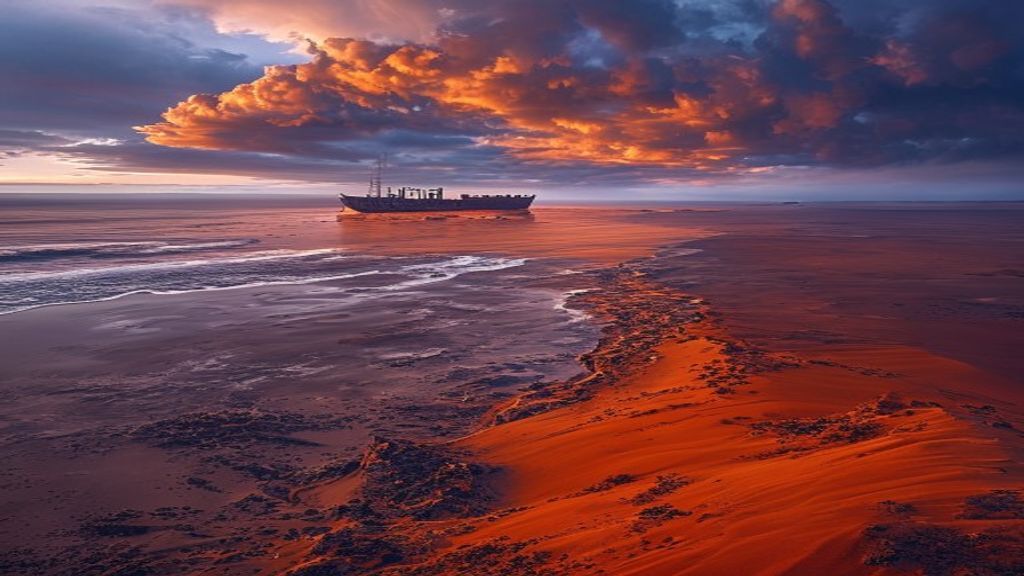
A place of savage, otherworldly beauty — Namibia's Skeleton Coast is where towering rust-red sand dunes collapse into a frigid, fog-shrouded Atlantic shore littered with shipwrecks, whale bones, and vast colonies of Cape fur seals.
Namibia’s Skeleton Coast: Where the Desert Meets the Wild Atlantic
There are places on Earth that feel like another planet, where the scenery is so extreme and untouched that human presence seems almost accidental. Namibia’s Skeleton Coast is one of those places. Stretching roughly 500 km along the northwestern Atlantic shore, this remote and UNESCO-recognized wilderness is one of Africa’s last truly wild frontiers — and among the most hauntingly beautiful landscapes anywhere on the globe.
The name itself carries weight. The Bushmen of the Kalahari called it The Land God Made in Anger. Portuguese sailors named it The Gates of Hell. Today, it is a protected national park of breathtaking desolation and unexpected abundance — a paradox of lifelessness and life.
What Makes the Skeleton Coast Special
The magic of the Skeleton Coast lies in its impossible contradictions. The Namib Desert — the world’s oldest desert — meets the freezing Benguela Current of the South Atlantic in a perpetual collision of red dunes and silver fog. The result is a landscape that shifts from burnished copper to ghostly grey within minutes as the morning mist rolls in from the ocean.
Shipwrecks are the coast’s most iconic feature. For centuries, the treacherous currents and dense fogs drove vessels onto shore, stranding sailors in a desert with no water and no hope of inland escape — hence the bleached bones and ship hulls that gave the coast its name. Today, rusted wrecks like the Eduard Bohlen — marooned half a kilometer inland as the shoreline advanced — are monuments to nature’s overwhelming power.
Yet for all its apparent hostility, the Skeleton Coast teems with life. The Cape Cross Seal Reserve hosts one of the world’s largest colonies of Cape fur seals — up to 100,000 animals that fill the beach with thunderous barking. Brown hyenas, desert-adapted lions, and oryx roam the southern park. In the northern wilderness concession, accessible only by chartered small plane, ancient desert elephants and black rhino move silently through river valleys.
The Namib’s Star Feature: Sossusvlei
While technically south of the Skeleton Coast proper, Sossusvlei in the Namib-Naukluft National Park is the region’s crown jewel and a natural wonder that must be seen in person to be believed. The dunes of Sossusvlei — including the iconic Dune 45 and the towering Big Daddy at 325 meters — are among the highest in the world, their perfect crescent shapes glowing in shades of deep apricot and burnt sienna at sunrise. At the base of Big Daddy lies Deadvlei, a white clay pan dotted with 900-year-old mummified camel thorn trees, blackened by the sun against a blinding white landscape. It is the most photographed scene in Africa, and for good reason.
Best Time to Visit
May through October (Namibia’s dry winter) is the best time to visit. Days are warm and clear (20–28°C), wildlife concentrates around water sources, and the golden-hour light on the dunes is at its most dramatic. June and July can bring cold nights in the desert — pack layers. Avoid the rainy season (January–March) for road conditions, though the landscape greens beautifully.
Must-See Spots
- Deadvlei & Sossusvlei – Ancient dead trees on a white clay pan at sunrise
- Dune 45 & Big Daddy – Climb the world’s tallest sand dunes at dawn
- Cape Cross Seal Reserve – Witness a 100,000-strong fur seal colony
- Eduard Bohlen Shipwreck – A rusted hull marooned mid-desert
- Damaraland – Ancient desert elephants, rock engravings, and red mountains
Practical Tips
- Getting there: Fly into Windhoek’s Hosea Kutako International Airport, then either self-drive (4WD recommended) or join a guided safari. The northern Skeleton Coast wilderness requires a fly-in charter.
- Self-driving: Namibia is one of Africa’s best self-drive destinations. Roads are well-maintained in the south; the north requires experience with 4WD and desert driving.
- Where to stay: Desert lodges like Sossusvlei Desert Lodge and Little Kulala offer staggering dune views and luxury under the stars. For the budget-conscious, NamibRand Nature Reserve has excellent campsites.
- Dark Skies: Namibia has some of the clearest, darkest skies on Earth. The NamibRand is an International Dark Sky Reserve — stargazing here is transcendent.
- Respect wildlife: Keep distances from seals and desert-adapted wildlife. Dune ecosystems are fragile — stay on marked paths.
The Skeleton Coast does not welcome you with warmth. It confronts you with scale, silence, and a raw geological drama that recalibrates your sense of what our planet truly is. That is exactly why you should go.