Namib Desert Dreams: Where Ancient Dunes Meet the Atlantic
The Namib is the world's oldest desert — a place where 80-million-year-old orange dunes tumble into the cold South Atlantic and fog-fed ecosystems sustain life in conditions that seem utterly impossible. Namibia's crown jewel is a landscape so alien and so beautiful it rewires the way you see the Earth.
Namib Desert Dreams: Where Ancient Dunes Meet the Atlantic
There are deserts, and then there is the Namib. Stretching along Namibia’s Atlantic coastline for over 2,000 kilometers, this is not a place of empty sameness — it is a constantly shifting masterpiece of color, form, and extraordinary life. The Namib is believed to be between 55 and 80 million years old, making it the oldest desert on Earth, and every grain of its iconic ochre sand carries the weight of deep time.
What Makes the Namib Special
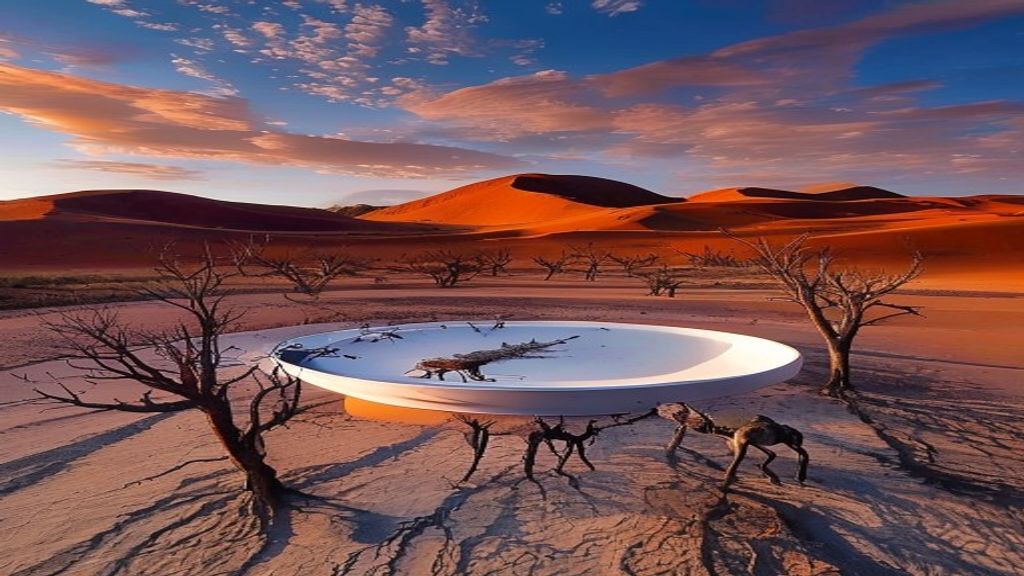
The Namib’s defining drama is geological and meteorological in equal measure. The towering star dunes of Sossusvlei — some rising over 300 meters, the tallest in the world — glow from rust-red to deep apricot to blinding gold depending on the angle of the sun and the hour of the day. At the heart of the dune sea lies Deadvlei: a white clay pan studded with the skeletal black silhouettes of 900-year-old dead camel thorn trees, their forms preserved by the extreme aridity. It is one of the most photographed scenes on Earth, and it earns every click of every shutter.
But the Namib is far more than Sossusvlei. The Skeleton Coast to the north is a gothic wilderness of shipwrecks, roaring surf, seal colonies, and desert-adapted lions that hunt seals on the beach. The Namib-Naukluft National Park — at over 49,000 km² one of the largest conservation areas in Africa — protects a staggering diversity of ecosystems from gravel plains to river gorges.
Must-See Spots
- Sossusvlei & Deadvlei: Rise before dawn to be at Dune 45 or Big Daddy for sunrise. The colors shift minute by minute as the light changes — pack patience and a wide-angle lens.
- Sesriem Canyon: A narrow 30-meter deep gorge carved by the Tsauchab River — geologically fascinating and eerily quiet.
- Swakopmund: A Namibian coastal town with a distinctly German colonial architecture and a quirky energy. The base for quad biking, sandboarding, and dolphin kayaking.
- Sandwich Harbour: A UNESCO-listed lagoon where massive live dunes cascade directly into the Atlantic surf — accessible only by 4WD at low tide.
- NamibRand Nature Reserve: The darkest night skies in Africa, certified by the International Dark-Sky Association. The Milky Way here is not a suggestion — it is an overwhelming, humbling ceiling of light.
Best Time to Visit
May through October (Namibian winter) is the ideal window — dry, cool, and clear. Temperatures in Sossusvlei range from 20–28°C by day and drop sharply at night. Avoid December through February when daytime temperatures in the desert interior can exceed 45°C. The Skeleton Coast is cool and foggy year-round thanks to the Benguela Current.
Practical Tips
- Getting there: Fly into Windhoek (Hosea Kutako International Airport) from Johannesburg, Frankfurt, or London. Domestic flights connect Windhoek to Swakopmund and the Skeleton Coast.
- Getting around: A self-drive 4WD rental is the most flexible option — Namibia has excellent gravel roads and is one of Africa’s safest and most self-drive-friendly destinations. Guided fly-in safaris are also spectacular.
- Accommodation: Splurge on at least one lodge inside or near Sossusvlei — early gate access (before general visitors) for dune sunrise is transformative and only available to lodge guests.
- Permits: Entry to Sossusvlei/Deadvlei requires a Namib-Naukluft Park permit, payable at the Sesriem gate. Book accommodation and car rental well ahead for peak season.
- Health: Carry far more water than you think you need. The desert air is extremely dry and dehydration sets in quickly. Sunscreen, a hat, and closed shoes for dune climbing are essential.
Final Word
The Namib has a way of silencing you. Standing on the crest of a 300-meter dune at dawn, watching the shadow-line creep across the valley below as the sun clears the horizon, you feel simultaneously very small and very glad to be alive. This is a landscape that doesn’t perform for you — it simply is, ancient and indifferent and achingly beautiful. Go. Let it rearrange you.