Hidden Gems of the Azores: Europe's Volcanic Wonderland
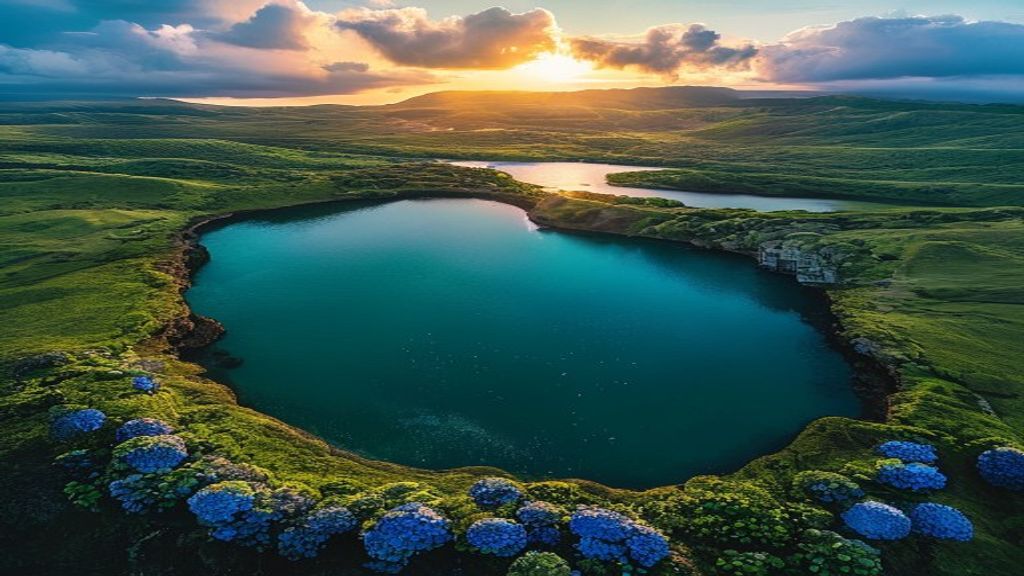
Rising from the mid-Atlantic like emerald jewels, the Azores offer dramatic calderas, steaming hot springs, and impossibly blue crater lakes that feel like the edge of the earth. This Portuguese archipelago remains one of Europe's best-kept secrets — and its time has come.
Hidden Gems of the Azores: Europe’s Volcanic Wonderland
Nine volcanic islands scattered across the mid-Atlantic. Crater lakes that shimmer between shades of jade and cobalt. Cows grazing on hillsides so green they look painted. The Azores — an autonomous Portuguese archipelago roughly 1,500 km west of Lisbon — is the kind of place that makes you wonder how the rest of the world hasn’t caught on yet. Quietly, it has.
What Makes the Azores Special
The Azores sit on the junction of three tectonic plates, which means the landscape is raw, alive, and endlessly dramatic. Unlike the sun-baked beaches of mainland Europe, these islands are lush year-round, carpeted in hydrangeas that bloom in electric blue and purple walls along country roads. Each island has its own personality: São Miguel is the most visited and still wildly underrated; Flores is practically untouched; Corvo has fewer than 400 residents.
The archipelago is also one of the best whale-watching destinations on the planet. Sperm whales are resident year-round, and between April and October, blue whales, fin whales, and dozens of dolphin species pass through the warm Atlantic currents.
Must-See Spots
- Sete Cidades, São Miguel — A twin crater lake split by a narrow bridge, one side green, one deep blue. The hike along the rim at sunrise is transformative.
- Furnas Valley, São Miguel — Bubbling fumaroles, thermal mud pools, and the famous cozido das Furnas — a meat stew slow-cooked underground by volcanic heat.
- Faial’s Capelinhos Volcano — A moonscape of ash and lava that erupted as recently as 1957, with an extraordinary buried lighthouse museum.
- Flores Island — Waterfalls tumbling directly into the sea, lagoons ringed by volcanic rock, and absolute silence.
Best Time to Visit
The Azores are a year-round destination, but May through September offers the warmest temperatures (18–26°C) and the calmest seas. Spring is particularly magical — wildflowers blanket every hillside, and whale migration is at its peak. Avoid late autumn if you’re island-hopping, as inter-island flights can be disrupted by Atlantic storms.
Practical Tips
- Getting there: TAP Air Portugal flies direct from Lisbon to Ponta Delgada (São Miguel) in under 2.5 hours. Transatlantic flights from Boston and Toronto also serve the Azores seasonally.
- Getting around: Rent a car on each island — public transport is limited and the roads are part of the experience.
- Budget: The Azores are refreshingly affordable by Western European standards. Expect to pay €60–€100/night for excellent local guesthouses (casas de campo).
- Currency: Euro (Portugal/EU).
- Sustainability note: The Azores are actively investing in eco-tourism. Respect marked trails, avoid single-use plastics, and choose local operators for whale-watching tours.
The Azores won’t stay a secret much longer. Go while the hydrangeas still outnumber the tourists.