The Faroe Islands: Where the Ocean Meets the Sky
Eighteen windswept islands perched between Norway and Iceland, the Faroe Islands are one of the most dramatic and otherworldly landscapes on Earth — a place of sea-stacked cliffs, grass-roofed villages, and an atmosphere so raw it feels like standing at the very edge of civilization.
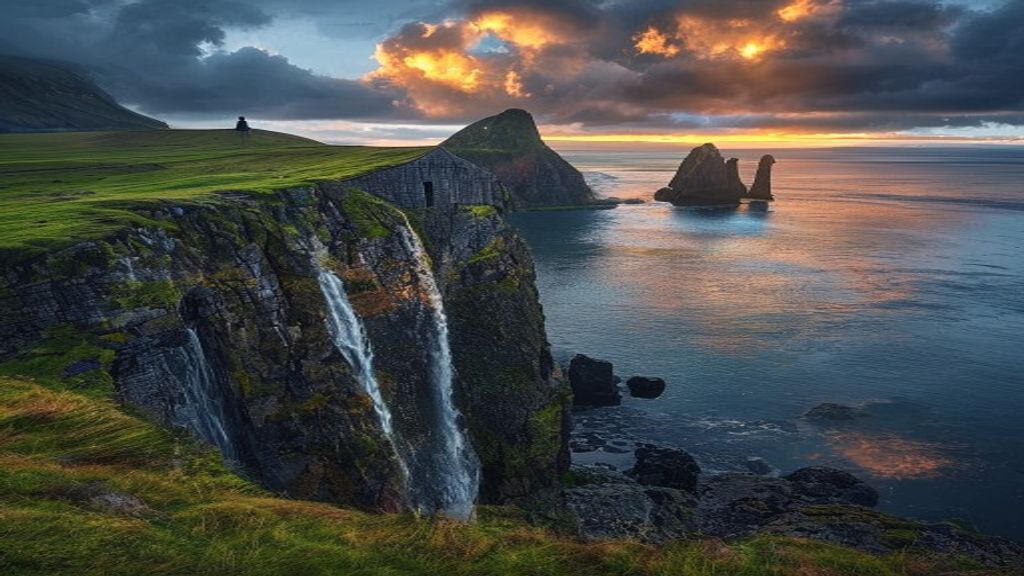
The Faroe Islands: Where the Ocean Meets the Sky
There is a moment on the Faroe Islands — it might hit you on a cliff above Trælanípa, or from a boat looking up at Drangarnir sea stacks, or simply standing in a village so quiet you can hear the grass move — when you realize you have arrived somewhere that exists entirely on its own terms. The Faroes don’t perform for tourists. They simply are: ancient, indifferent, and staggeringly beautiful.
This autonomous Danish archipelago of 18 islands sits roughly halfway between Norway and Iceland in the North Atlantic. Around 55,000 people call it home. The sheep outnumber them by a factor of nearly two.
What Makes the Faroe Islands Special
The Faroes are defined by contrast and drama. Vertical basalt cliffs drop hundreds of meters into churning seas. Waterfalls pour over cliff edges and disappear into the ocean below. Turf-roofed wooden churches cling to hillsides above mirror-calm fjords. The light here — filtered through Atlantic clouds — is unlike anywhere else on earth: silver, shifting, cinematic.
But what truly sets the Faroes apart is the feeling of genuine remoteness paired with extraordinary hospitality. The Faroese have spent centuries learning to welcome visitors in the face of harsh conditions. The food scene — led by the world-renowned Koks restaurant and a wave of younger Faroese chefs — has put the islands firmly on the global culinary map, celebrating fermented lamb, dried fish, and locally foraged ingredients.
Must-See Spots
- Sørvágsvatn (Leitisvatn) Lake — An optical illusion lake that appears to float above the ocean, accessed via a cliffside trail. One of the most photographed spots in the North Atlantic.
- Gásadalur Village and Múlafossur Waterfall — A tiny village of nine residents with a waterfall that plunges from behind the church directly into the sea below. Arrive at dusk.
- Drangarnir and Tindhólmur Sea Stacks — Best seen by boat from Sørvágur. These jagged volcanic stacks rising from the Atlantic are primordial and unforgettable.
- Kirkjubøur — The Faroes’ cultural heart, with 11th-century ruins of an unfinished Gothic cathedral and a farmhouse that has been continuously inhabited for over 900 years.
- Vestmanna Bird Cliffs — Boat tours navigate sea caves and beneath sheer 400-meter cliffs teeming with puffins, guillemots, and gannets.
Best Time to Visit
June through August offers the longest days (near-continuous daylight in June), the mildest temperatures (12–16°C), and the most accessible hiking conditions. September and October bring dramatic storm light, fewer crowds, and the first chances of witnessing the Northern Lights. Winter is for the bold — short days, powerful Atlantic gales, but auroras and a haunting, elemental beauty.
Practical Tips
- Getting there: Atlantic Airways and Scandinavian Airlines fly into Vágar Airport (FAE) from Copenhagen, Edinburgh, and Reykjavík. The drive from the airport passes through a stunning undersea tunnel.
- Getting around: Rent a car — the road network is excellent and many locations require it. Undersea tunnels and sub-sea roundabouts connect most islands.
- Weather: Pack waterproofs regardless of the season. The Faroes famously experience four seasons in a single day. Layers are essential.
- Currency: Danish Krone (DKK), though the Faroese Króna is also used locally. Cards accepted nearly everywhere.
- Accommodation: Book well in advance for summer. Options range from traditional guesthouses (heimablídni — home hospitality dinners are a local tradition) to design hotels in Tórshavn.
- Responsible travel: The Faroes have introduced voluntary Closed for Maintenance days on popular trails. Always check before visiting — it’s a meaningful conservation effort worth respecting.
The Faroe Islands are not a destination you visit so much as one you survive — and fall completely, irreversibly in love with.