The Faroe Islands: Standing at the Edge of the World
Eighteen volcanic islands in the North Atlantic where sheep outnumber people, fog is a companion, and the landscape feels pulled from a fever dream.
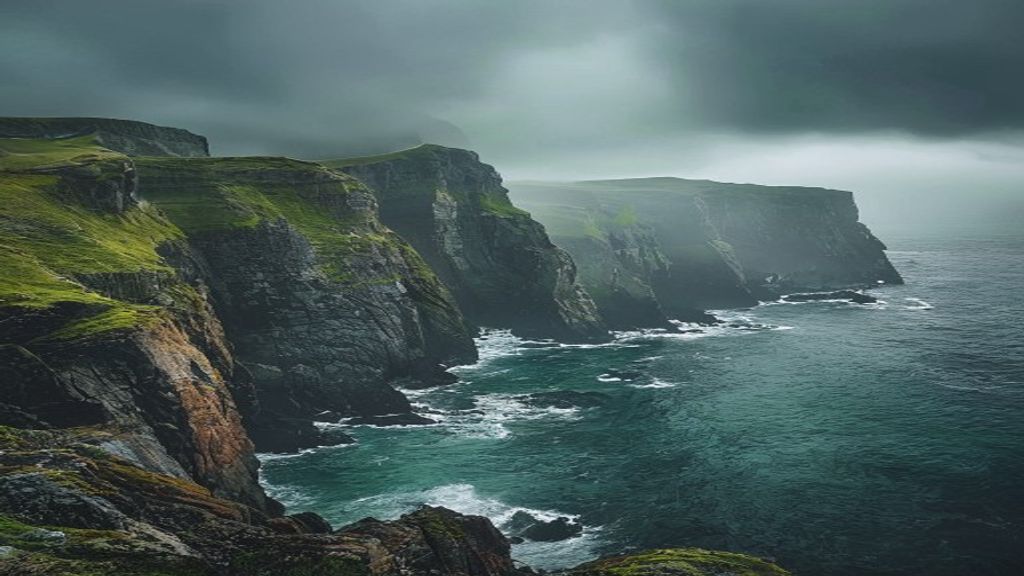
Where the Atlantic Meets the Arctic
The first thing you notice is the silence. Not the absence of sound exactly — the wind is always talking here — but the absence of noise. No traffic hum. No construction. No notifications. Just wind, water, and the occasional indignant bleat of a sheep asserting its right-of-way on a single-lane road carved into the side of a cliff.
The Faroe Islands sit roughly halfway between Norway and Iceland, a volcanic archipelago of eighteen islands connected by tunnels, ferries, and the sheer stubbornness of the 54,000 people who call this place home. Getting here requires intention. Staying requires surrender — to weather that changes every twenty minutes, to roads that disappear into clouds, and to a landscape so dramatic it makes you question whether you have wandered into a rendering engine’s stress test.
Múlafossur — The Waterfall That Falls Into the Sea
On the island of Vágar, a short hike from the village of Gásadalur brings you to one of the planet’s most improbable waterfalls. Múlafossur drops directly from a cliff edge into the Atlantic Ocean, the water shredding to mist before it reaches the waves below. On a clear day — and those are earned, not expected — the view extends across the water to the silhouette of Mykines island, home to the Faroes’ Atlantic puffin colonies.
The hike itself is gentle, but the wind at the cliff edge is not. Plant your feet and hold your camera with both hands.
Gjógv — The Village in the Gorge
On the northern tip of Eysturoy, the village of Gjógv (pronounced roughly like “jegv”) sits at the end of a natural gorge that slices into the ocean. Brightly painted houses — turf-roofed, as tradition demands — cluster around the narrow inlet where fishing boats once launched into waters that show no mercy.
The hike above Gjógv leads to the summit of Ambadalsfelli, where on a rare cloudless afternoon the view encompasses six islands simultaneously. More likely, you will hike through shifting veils of fog that part just long enough to show you something magnificent before closing again, as if the islands are deciding how much to reveal.
Sørvágsvatn — The Lake Above the Ocean
An optical illusion made real by geology: Sørvágsvatn (also called Leitisvatn) sits on a cliff thirty meters above the Atlantic, and from certain angles appears to hover impossibly above the sea. The hike to the viewpoint crosses terrain that is equal parts moorland, stream crossing, and sheep negotiation. Bring waterproof everything. The Faroes do not recognize the concept of “water-resistant.”
The Food Revolution
Faroese cuisine has undergone a quiet revolution. Traditional methods — fermentation, wind-drying, smoking — that sustained islanders through centuries of isolation have been reinterpreted by a new generation of chefs. The restaurant KOKS, which has held Michelin stars, serves multi-course menus built entirely from Faroese ingredients: fermented lamb, sea urchin, dried fish, and herbs foraged from the hillsides that morning.
But the most memorable meal might be the simplest: fresh catch from a local fisherman, cooked over an open flame in a boathouse, washed down with Faroese beer while the North Atlantic crashes against the rocks outside.
Practical Notes
- Getting there: Atlantic Airways flies from Copenhagen, Edinburgh, and Reykjavik
- Best time: June-August for the longest days and mildest weather (which still means 10°C and sideways rain)
- Driving: Rent a car — it is the only practical way to explore. Sub-sea tunnels connect the main islands
- Clothing: Layers. Waterproofs. Wool. Then one more layer on top of that
- Respect the land: The Faroes have introduced a “closed for maintenance, open for voluntourism” program — check before you hike
Come here to feel small. Come here to feel alive. They are the same thing.