Chiang Rai: Thailand's Dreamy Northern Secret
While tourists flock to Bangkok and Phuket, the golden-spired temples and mist-covered mountains of Chiang Rai quietly offer one of Southeast Asia's most enchanting and soulful travel experiences.
Chiang Rai: Thailand’s Dreamy Northern Secret
Ask most travellers about northern Thailand and they’ll name Chiang Mai. Ask the ones who went further north — the ones who rented a motorbike and followed the road into the mountains — and they’ll tell you about Chiang Rai. Thailand’s northernmost city sits close to the borders of Myanmar and Laos, surrounded by misty highlands, tribal villages, and a cultural scene so rich and unhurried it feels like stepping into a different world entirely.
What Makes Chiang Rai Special
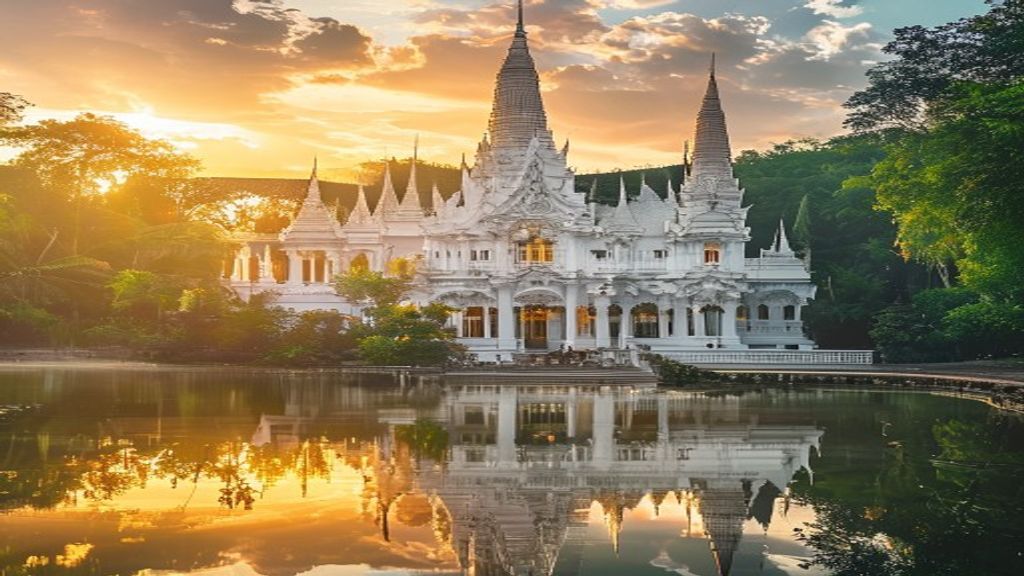
Chiang Rai is best known for one spectacular landmark: the White Temple (Wat Rong Khun), a contemporary Buddhist masterpiece that looks like it was carved from ice and encrusted with mirrors. Designed by artist Chalermchai Kositpipat, it’s one of the most visually arresting structures in all of Asia — and it’s still being built, a lifelong project of its creator.
But the White Temple is just the opening act. The Blue Temple (Wat Rong Suea Ten) dazzles with electric cobalt walls and golden serpent railings. The Black House (Baandam Museum), built by provocateur artist Thawan Duchanee, is an entire compound of dark, hand-crafted structures filled with animal bones and antique furniture — a haunting counterpoint to the area’s spiritual architecture.
Beyond the temples, Chiang Rai is a gateway to the Golden Triangle, where Thailand, Myanmar and Laos meet at the Mekong River — historically notorious, today fascinating and surprisingly serene.
Best Time to Visit
November to February is the golden window. Temperatures drop to a pleasant 15–25°C, skies are clear, and the surrounding mountains turn golden with harvest season. Avoid March and April when agricultural burning creates thick haze across the north.
Must-See Spots
- Wat Rong Khun (White Temple) — Arrive early morning before tour buses arrive. The reflected light on the mirrored mosaics at sunrise is transcendent.
- Doi Tung Royal Villa & Garden — A mountain palace surrounded by manicured gardens and panoramic views of the Thai-Myanmar border.
- Doi Mae Salong — A mountain village settled by Chinese Nationalist soldiers in the 1950s, now famous for oolong tea plantations and morning mist. Like a piece of Yunnan in Thailand.
- Chiang Rai Night Bazaar — Relaxed, local and packed with handicrafts from the region’s hill tribes including the Akha, Yao, and Lahu peoples.
- Mae Klong Reservoir (Kwan Phayao nearby) — A stunning freshwater lake at dusk, ringed by mountains and an ancient submerged temple.
Practical Tips
- Getting there: Chiang Rai International Airport (CEI) has direct connections from Bangkok (1 hour). You can also take a scenic bus or slow boat from Chiang Mai (3–4 hours).
- Getting around: Rent a motorbike or hire a songthaew (red truck) for day trips. Roads are good and traffic light outside the city.
- Where to stay: The city centre has excellent budget guesthouses. For something special, eco-lodges in the surrounding hills offer rice paddy views and cool mountain air.
- Day trips: The region rewards slow exploration. Plan at least 3–4 days and consider a day trip into Laos via the Huay Xai border crossing.
- Respect local customs: Many villages welcome visitors but always ask before photographing people, and dress modestly at temples.
Chiang Rai is what Chiang Mai was twenty years ago — warm, walkable, and completely its own.