Chiang Rai's Quiet Magic: Northern Thailand Beyond the Tourist Trail
While Chiang Mai grabs all the headlines, its quieter northern neighbor Chiang Rai rewards curious travelers with surreal temples, misty mountain villages, and a deeply authentic slice of Thai culture untouched by mass tourism. This is Northern Thailand at its most honest and most beautiful.
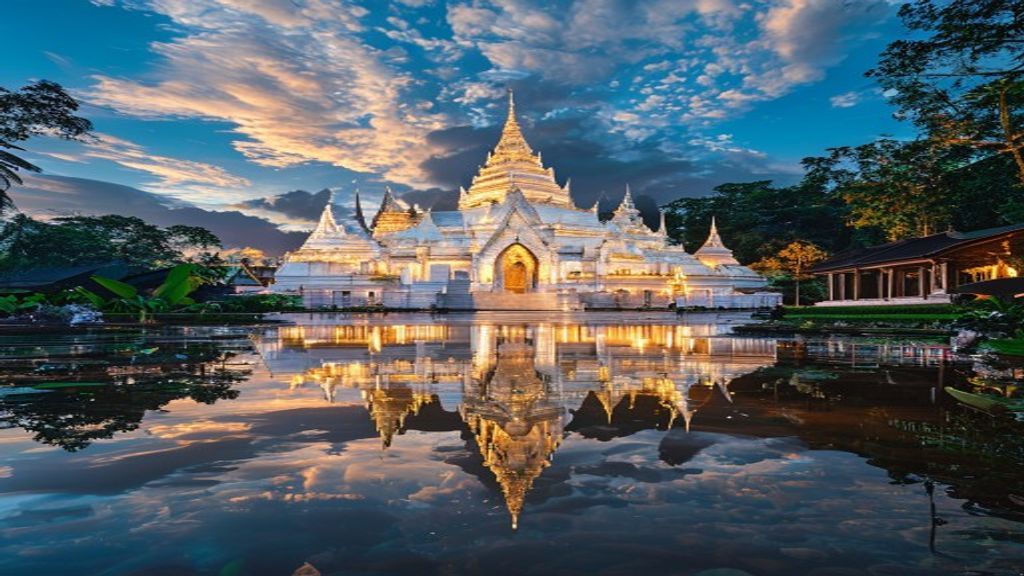
Chiang Rai’s Quiet Magic: Northern Thailand Beyond the Tourist Trail
Most travelers flying into Northern Thailand set their sights firmly on Chiang Mai, and understandably so. But venture another three hours north and you’ll find Chiang Rai — a city that carries all the charm of its famous neighbor at a fraction of the pace, the price, and the crowd. Here, the air is cooler, the temples are stranger and more spectacular, and the mountains fold into the horizon like a painted backdrop that simply doesn’t look real.
What Makes Chiang Rai Special
Chiang Rai is Thailand’s northernmost province, bordering both Myanmar and Laos at the legendary Golden Triangle. The city itself is compact and walkable, but it’s the surrounding landscape — terraced rice fields, dense jungle, mist-cloaked hill tribe villages, and the slow brown curl of the Mekong River — that makes it unforgettable.
The art scene here is also genuinely remarkable. Visionary artist Chalermchai Kositpipat has spent decades transforming the region’s temples into otherworldly works of contemporary Buddhist art that rival anything you’ll find in Southeast Asia.
Must-See Spots
- Wat Rong Khun (White Temple): An all-white temple encrusted with mirror glass that blinds and dazzles in the sun. The interior murals are shocking, surreal, and deeply thought-provoking — a uniquely 21st-century take on Buddhist iconography.
- Baan Dam (Black House Museum): The dark, brooding counterpart to the White Temple. Artist Thawan Duchanee filled this complex of dark wooden structures with animal bones, pelts, and carved furniture — hauntingly beautiful.
- Doi Tung Royal Villa & Gardens: A mountain estate built for the late Princess Mother, surrounded by manicured gardens blooming with thousands of flowers. The views over the surrounding hills are spectacular.
- Mae Salong: A mountain village founded by Chinese Nationalist soldiers in the 1960s, now famous for its oolong tea plantations. Walking through terraced tea fields at dawn is one of Northern Thailand’s great quiet pleasures.
- Chiang Saen & the Golden Triangle: Where Thailand, Laos, and Myanmar meet at the confluence of the Mekong. The ancient ruined temples of Chiang Saen, largely ignored by tourists, are extraordinary.
Best Time to Visit
November through February is the golden window — cool, dry, and clear. Temperatures drop to a pleasant 15–22°C in the city and significantly cooler in the mountains. Avoid March and April when smoke from agricultural burning creates haze. The rainy season (June–October) turns the hills lush and green, and accommodation prices drop sharply.
Practical Tips
- Getting there: Chiang Rai has its own international airport (CEI) with direct connections to Bangkok, Chiang Mai, and several regional hubs. Buses from Chiang Mai run frequently and cost around 150–200 THB.
- Getting around: Songthaews (shared red trucks) cover the city cheaply. Rent a scooter or hire a driver for day trips to surrounding villages and temples.
- Budget: Chiang Rai is notably cheaper than Chiang Mai. Budget travelers can live very comfortably on €25–€35/day.
- Etiquette: Dress modestly when visiting temples — shoulders and knees covered. Remove shoes before entering temple buildings.
- Day trips: Consider a long-tail boat trip on the Mekong into Laos, or a homestay with a hill tribe community organized through an ethical tour operator.
Final Word
Chiang Rai moves to a gentler rhythm. Mornings begin with the sound of monks collecting alms in the mist. Afternoons dissolve into long lunches of khao soi and fresh mango. Evenings belong to the Night Bazaar’s street food stalls. It is a city that asks nothing of you except to slow down — and in slowing down, you might just find it’s one of Asia’s finest destinations.