Chiang Rai After Dark: Thailand's Forgotten Northern Crown
While Chiang Mai collects the Instagram posts and the package tours, its quieter northern neighbor Chiang Rai quietly gets on with being one of Southeast Asia's most fascinatingly surreal and culturally rich destinations. Here, you'll find temples that look like fever dreams, hill tribe villages untouched by mass tourism, and a Golden Triangle where three countries meet at the river's edge.
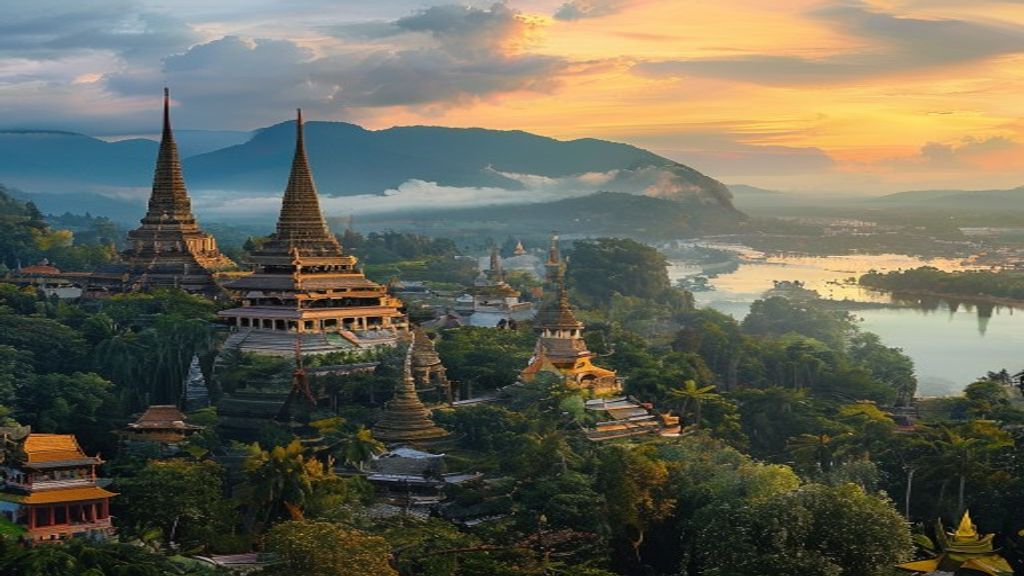
Chiang Rai After Dark: Thailand’s Forgotten Northern Crown
Chiang Rai sits just 180 kilometers north of Chiang Mai, but in temperament it exists in a different universe entirely. Slower, stranger, more genuinely itself. Visitors who make it here — and many don’t bother — tend to extend their stays. The city has a way of rearranging your plans.
What Makes Chiang Rai Special
Let’s begin with the temples, because they are unlike anything else in Thailand or, arguably, the world.
The Wat Rong Khun — universally known as the White Temple — was designed by local artist Chalermchai Kositpipat and has been under continuous construction since 1997. It is white and mirrored, blindingly beautiful in direct sunlight, part Buddhist temple and part contemporary art installation. The bridge to the entrance is lined with hundreds of hands reaching upward from below — souls seeking salvation — and the effect is simultaneously haunting and strangely joyful.
A few kilometers away, the Blue Temple (Wat Rong Suea Ten) offers a completely different visual world: deep cobalt blue walls, golden serpent nagas, and murals rendered in electric ultramarine. It feels like stepping inside a bioluminescent dream.
But Chiang Rai’s magic extends well beyond its temples. The city is the gateway to the Golden Triangle, the mountainous border region where Thailand, Myanmar, and Laos converge at the Mekong River. A long-tail boat crossing to Laos for afternoon coffee and a return by sunset costs almost nothing and crosses one of Southeast Asia’s most historically loaded rivers.
The Hill Tribes and Trekking Culture
The mountains surrounding Chiang Rai are home to several distinct hill tribe communities — Akha, Karen, Lisu, Hmong — each with distinct languages, textiles, and traditions. Responsible trekking operators based in the city offer multi-day village stays that emphasize cultural exchange over voyeurism, with proceeds directly supporting community development. This is the kind of slow travel that genuinely changes perspectives.
Doi Tung Mountain to the northwest offers cooler air, royal botanical gardens, and the kind of misty highland scenery that makes every photograph look effortlessly composed.
Chiang Rai’s Night Bazaar and Food Scene
Every Saturday evening, the city’s Walking Street transforms into one of northern Thailand’s best night markets. Local artisans sell silver jewelry, hand-woven textiles, and ceramics without the aggressive hawking common in tourist-heavy markets further south. The food stalls here serve khao soi (the north’s signature coconut curry noodle soup), sai oua (herbal northern sausage), and grilled corn that has absolutely no business tasting as good as it does.
Chiang Rai also has a growing specialty coffee scene fueled by highland Arabica farms — the Doi Chang and Doi Tung coffee-growing regions produce beans that rival anything from Ethiopia or Colombia.
Best Time to Visit
November through February is the golden window: cool and dry, with temperatures that make outdoor exploration genuinely pleasant (18–25°C). The Flower Festival in February fills the city with blooms. Avoid April, which brings smoky haze season from agricultural burning in the hills — air quality can deteriorate significantly.
Must-See Spots
- Wat Rong Khun (White Temple) — Go at opening time (8am) to beat the midday crowds.
- Baan Dam Museum (Black House) — Artist Thawan Duchanee’s dark, extraordinary compound of 40 structures filled with skulls, skins, and dark iconography. Utterly compelling.
- Golden Triangle viewpoint — Sunset over three countries and one river.
- Doi Mae Salong — A mountain village settled by Yunnanese Chinese refugees in the 1950s. Tea plantations, Mandarin conversation, and extraordinary dim sum.
Practical Tips
Getting there: Daily flights from Bangkok (1h 15m) and Chiang Mai (30 min). Alternatively, a scenic overnight train to Chiang Mai followed by a 3-hour bus.
Getting around: Rent a scooter for day trips, use songthaew (shared red trucks) in town.
Budget: Very affordable — quality guesthouse accommodation runs ฿600–฿1,500/night (€15–€40).
Stay: Choose guesthouses north of the city center near the Kok River for the most atmospheric experience.
Chiang Rai doesn’t need your discovery. It’s been here all along, doing something quietly magnificent.