Chefchaouen & the Rif Mountains: Morocco's Blue Dream
Painted in a thousand shades of cobalt, sky blue, and periwinkle, Chefchaouen is Morocco's most photogenic mountain town — but venture beyond its famous medina into the wild Rif Mountains and you'll find an entire world most travellers never see.
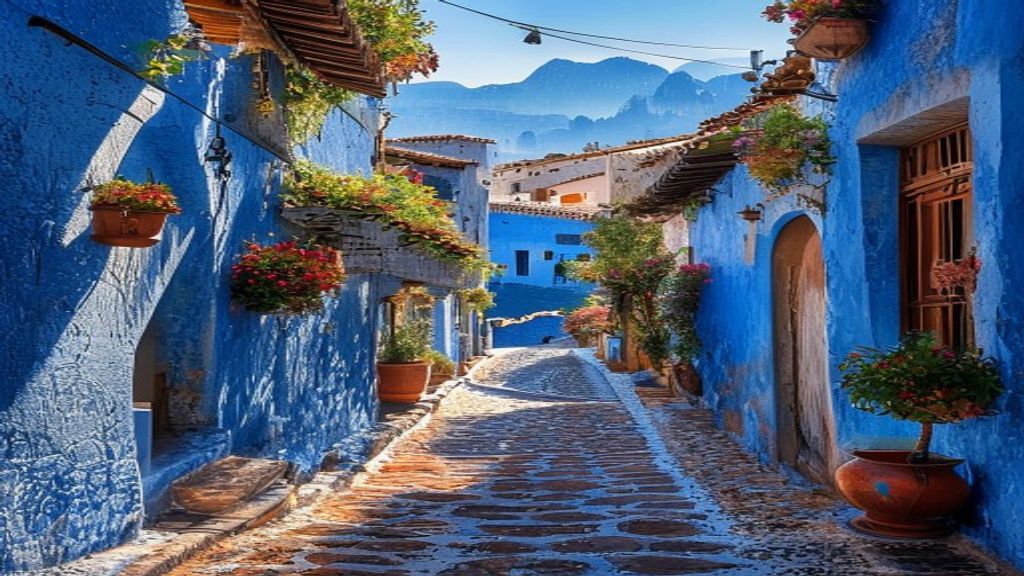
Chefchaouen & the Rif Mountains: Morocco’s Blue Dream
If a city could be made of sky, it would look like Chefchaouen. Founded in 1471 in the folds of the Rif Mountains of northern Morocco, this small city has painted itself an iconic shade of blue that has drawn artists, photographers, and wanderers for generations. Yet for all its Instagram fame, Chefchaouen — Chaouen to the locals — retains a profound, layered authenticity that rewards travellers who linger past the postcard moments.
What Makes It Special
The blue walls aren’t just aesthetic — they carry history. Jewish refugees who settled here in the 1930s are widely credited with introducing the blue paint as a symbol of spirituality and sky, and the tradition was embraced and expanded by the wider community over decades. Today, every alley in the medina is a gradient of blue: powder, royal, electric, aquamarine.
But Chaouen is not merely a backdrop. The medina is a living neighbourhood of spice merchants, weavers, and cafés where mint tea is poured from theatrical heights. The Plaza Uta el-Hammam anchors city life around a 15th-century kasbah and a striking mosque. The souks overflow with hand-woven Berber rugs, leather goods, and kif pipes (the Rif region has a complex relationship with cannabis cultivation, a cultural reality worth understanding before you go).
Into the Rif Mountains
Drive or hike 40 minutes from town and the blue city fades into wild mountain scenery. The Akchour Waterfalls trail (12 km round trip) winds through a limestone gorge to a series of natural pools and cascades — one of North Africa’s most underrated hikes. The Bridge of God (Pont de Dieu), a dramatic natural rock arch carved by the Farda River, is nearby and equally spectacular.
The village of Ain Tissimane offers a glimpse of rural Rif Berber life, with terraced farms clinging to near-vertical slopes and women in traditional striped foutas carrying goods on their backs.
Best Time to Visit
March to May and September to November are ideal — temperatures sit between 18–26°C, the light is golden and long, and the summer crowds haven’t arrived (or have departed). Summer can be hot and busy; winter brings cold nights and occasional snow on the peaks, which is beautiful but chilly.
Must-See Spots
- Ras Elma Spring – A natural spring at the city’s edge where locals gather at dawn
- Kasbah Museum – The old fortress housing Moroccan art and a stunning rooftop view
- Akchour Waterfalls – The Rif’s premier hiking trail
- Spanish Mosque – A ruined hilltop mosque with panoramic city views at sunset
- Plaza Uta el-Hammam – The beating heart of city life
Practical Tips
- Getting there: Chefchaouen is 3–4 hours by bus or shared taxi from Tangier or Fes. CTM and Supratours run reliable routes.
- Accommodation: Stay inside the medina in a riad — the experience is incomparable. Book well ahead in spring and autumn.
- Currency: Moroccan Dirham (MAD). ATMs available; carry cash for souks.
- Etiquette: Dress modestly (shoulders and knees covered), ask permission before photographing people, and be prepared to negotiate in the souks — it’s expected and enjoyable.
- Budget: Very affordable. A comfortable riad room, three meals, and activities rarely exceeds €40–€60/day.
Chefchaouen is proof that a place can be simultaneously famous and genuine — if you know where to look, and how to slow down.