Chefchaouen: Morocco's Dreamy Blue City in the Rif Mountains
Perched high in the Rif Mountains of northern Morocco, Chefchaouen is a labyrinth of powder-blue alleyways, cascading bougainvillea, and centuries-old medina architecture that feels more like a waking dream than a real place. It is one of Africa's most visually arresting cities — and its soul is every bit as beautiful as its walls.
Chefchaouen: Morocco’s Dreamy Blue City in the Rif Mountains
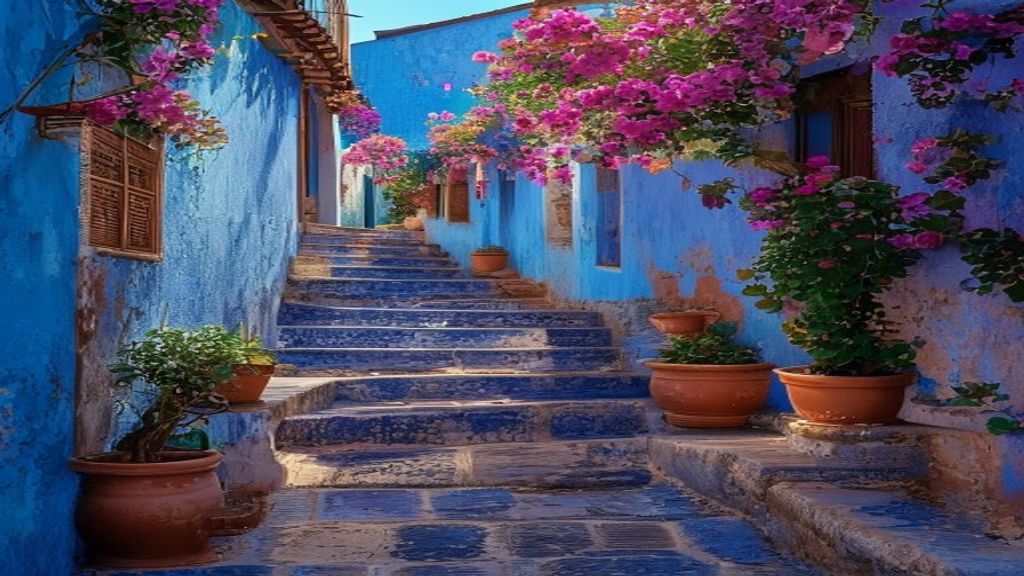
The first time you round a corner in Chefchaouen’s ancient medina and see a staircase of pure, luminous blue stretching upward into a tangle of terracotta rooftops and purple bougainvillea, you will understand immediately why this small mountain city has captivated travellers, artists, and photographers for generations. Known simply as “The Blue City,” Chefchaouen (Chaouen to locals) sits at roughly 600 metres elevation in Morocco’s Rif Mountains, a world apart from the frenetic energy of Marrakech or Fez.
What Makes Chefchaouen Special
The origins of the city’s iconic blue palette are debated — some historians trace it to Jewish refugees who arrived in the 1930s and painted the walls blue as a symbol of the sky and heaven; others point to older Moorish traditions. Whatever its roots, the effect is extraordinary: every alley, every doorstep, every pot and planter is rendered in some shade of blue, from the palest robin’s egg to a deep, saturated indigo. Walking the medina feels less like navigating a city and more like moving through a painting.
Beyond its visual spectacle, Chefchaouen is a genuinely warm and liveable place. The pace is slow, the air is cool and mountain-fresh, and the food — tagines fragrant with preserved lemon and olives, msemen flatbreads drizzled with honey and argan oil, mint tea poured from silver pots at theatrical height — is among the most satisfying in all of Morocco.
Best Time to Visit
March to May and September to November are the sweet spots: temperatures are comfortable (18–25°C), the light is golden and soft, and the medina is lively without feeling overwhelmed. Avoid July and August if you dislike crowds — Chefchaouen has become a major destination, and summer brings the masses. Winter is cold but magical, occasionally dusted with snow.
Must-See Spots
- Plaza Uta el-Hammam — The beating heart of the medina, ringed by café terraces and anchored by the striking 15th-century Grand Mosque and ancient kasbah. Arrive at sunset when the square glows amber.
- Ras El Maa Waterfall — A short walk from the medina, local women traditionally wash laundry in this crystal-clear mountain stream beneath a small cascade. Serene and photogenic.
- Spanish Mosque (Jama’a Bou Inania) — A 20-minute hike above the city rewards you with a panoramic view of the entire blue medina spilling across the hillside — the single best vantage point in Chefchaouen.
- Akchour Waterfalls, Talassemtane National Park — A half-day trip from the city leads through cedar and oak forest to a series of dramatic waterfalls and a natural rock arch — Morocco’s version of a canyon adventure.
- The Souks — Browse for hand-woven wool blankets, leather goods, and local goat cheese (jben) in the small, unhurried market streets of the medina.
Practical Tips
- Getting there: The nearest major city is Tetouan (1 hr) or Tangier (2.5 hrs by bus). CTM and Supratours buses connect Chefchaouen to Fez (4 hrs), Casablanca, and beyond. A private transfer from Tangier airport is the most comfortable option.
- Getting around: Chefchaouen’s medina is entirely walkable — and indeed only walkable. Leave your luggage at your riad and explore on foot.
- Where to stay: Stay in a traditional riad inside the medina walls for the full atmospheric experience. Many have rooftop terraces with mountain views.
- Currency: Moroccan Dirham (MAD). ATMs are available but carry cash for the souks.
- Respect local customs: Dress modestly (shoulders and knees covered) when exploring the medina. Ask before photographing locals.
- Budget: Very affordable — a comfortable riad room runs €30–60/night, and a generous medina lunch costs €5–8.