Chefchaouen: Morocco's Dreamy Blue City in the Rif Mountains
Painted almost entirely in shades of cobalt and indigo, Chefchaouen is an ancient mountain medina that feels like stepping inside a watercolor painting — a slow, soul-stirring escape tucked into Morocco's mist-wrapped Rif Mountains.
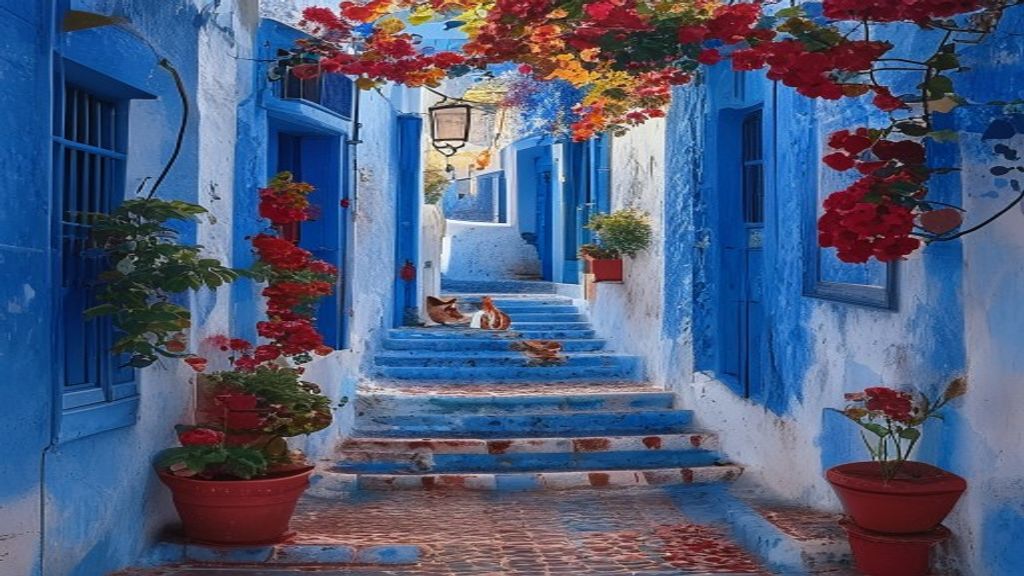
Chefchaouen: Morocco’s Dreamy Blue City in the Rif Mountains
High in the folds of the Rif Mountains in northern Morocco, where cedar forests give way to whitewashed walls and winding alleyways, lies one of the world’s most visually arresting cities. Chefchaouen — known simply as the Blue City — has been bathed in countless shades of blue for centuries. From pale powder to deep midnight, the color saturates every surface: steps, doorways, flowerpots, archways, and alley walls. Walking through its medina feels less like sightseeing and more like wandering inside a living painting.
What Makes Chefchaouen Special
Founded in 1471 as a small fortress, Chefchaouen grew as a refuge for Muslims and Jews fleeing the Spanish Reconquista. The blue pigment — the origin of which is still debated — may have been introduced by Jewish refugees who associated the color with the divine sky. Whatever its origins, the tradition has endured and deepened over centuries, creating an atmosphere that is simultaneously intimate and surreal.
Unlike Marrakech or Fes, Chefchaouen moves at a gentle pace. There are no hard sells at every corner, no overwhelming crowds thundering through souks. Instead, cats doze on sun-warmed blue steps, elderly men play cards in shaded squares, and the scent of cumin and fresh mint drifts from tiny cafés. The city rewards slow wandering — the kind where you turn down an unmarked alley and discover a hidden courtyard draped in bougainvillea.
Beyond the medina, the surrounding Talassemtane National Park offers hiking trails through old-growth cedar forests where Barbary macaques roam wild among the trees.
Best Time to Visit
Spring (March–May) and autumn (September–November) are ideal. The mountain air keeps temperatures pleasantly cool even when the Moroccan lowlands are sweltering. Spring brings wildflowers to the surrounding hills; autumn bathes the medina in rich, warm afternoon light that turns every blue wall golden. Avoid peak summer if you prefer smaller crowds, as Chefchaouen has grown considerably in popularity.
Must-See Spots
- Plaza Uta el-Hammam — The heart of the medina, anchored by a crumbling kasbah and the Great Mosque’s distinctive octagonal tower. Sit at a café here and let the city come to you.
- The Spanish Mosque — Perched above the city on a rocky hilltop, this ruined mosque offers the most photographed panoramic view of the blue rooftops at sunset.
- Ain Tissimane Waterfall — A short hike through the national park leads to this cool, refreshing cascade — a perfect escape from the afternoon heat.
- The Kasbah Museum — Housed inside the 15th-century fortress, it holds ethnographic exhibits and a beautiful Andalusian garden that few visitors take time to explore.
- Souq alley, Rue Targhi — The main craft market, where artisans sell handwoven wool blankets in the city’s signature blue-and-white palette.
Practical Tips
- Getting there: Chefchaouen is roughly 3 hours by CTM bus from Fes or Tangier, both of which are well served by trains and flights. Shared taxis (grands taxis) are faster and nearly as cheap.
- Getting around: The medina is entirely walkable — in fact, most of it is inaccessible to vehicles. Wear comfortable shoes; the cobblestones are charming but uneven.
- Stay: Riads within the medina walls are the only way to truly experience the city. Book early for spring and autumn visits.
- Eat: Try harira soup, fresh goat’s cheese, and msemen flatbreads with local honey. The mountain elevation means lamb and wild herb dishes dominate menus in a way you won’t find on the coast.
- Respect local culture: Chefchaouen is a conservative community. Dress modestly, ask permission before photographing residents, and observe appropriate behavior in religious spaces.
Chefchaouen doesn’t try to be anything other than exactly what it is — ancient, blue, and unhurried. In a world that increasingly clamors for attention, that quiet confidence is its greatest charm.